
Free FEA Vibration & Resonance Check for Static Components
- Receive a Go / No-Go decision delivered within 48 hours
- Identify vibration risks using modal analysis of your design
- Prevent resonance problems — before you spend money on machining, tooling, or test failures
- Prefer to ask a quick question first? Message us on WhatsApp.
No obligation. Your CAD files are treated confidentially, and we can sign an NDA on request.
Is the dynamic behaviour of your design acceptable?
Are you developing a component or assembly where the natural (resonant) frequency may fall too close to operating speed or other excitation?
Are you concerned that resonance could amplify vibration responses, reduce fatigue life, and lead to redesigns and costly failures?

What You’ll Gain from the Vibration Risk Assessment

Early warning of dynamic issues caused by resonance and high vibration

Confidence in the vibration performance of your design

Clear decision into whether you can advance confidently or need refinement before manufacturing
What’s Included in Your Free Report
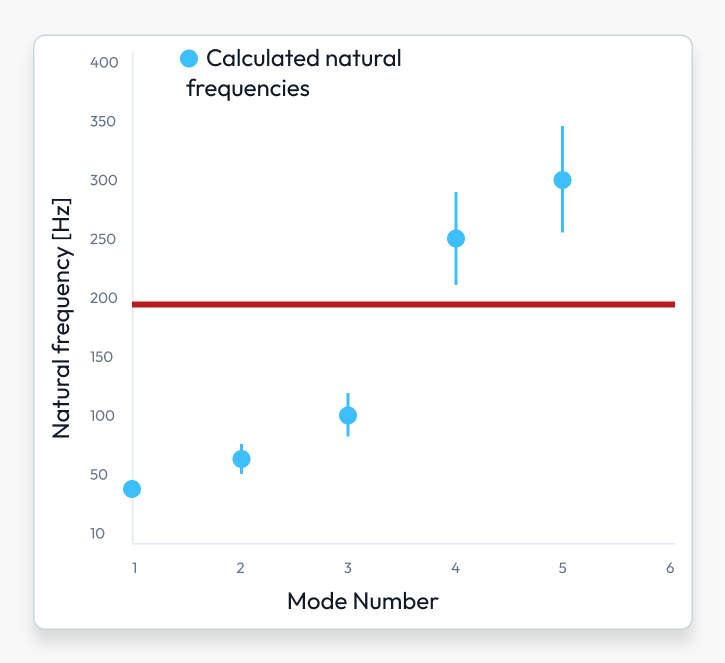
A clear Go/No-Go decision based on an acceptability criterion that checks whether a frequency-separation margin exists between your operating excitation and the component’s resonant frequencies.
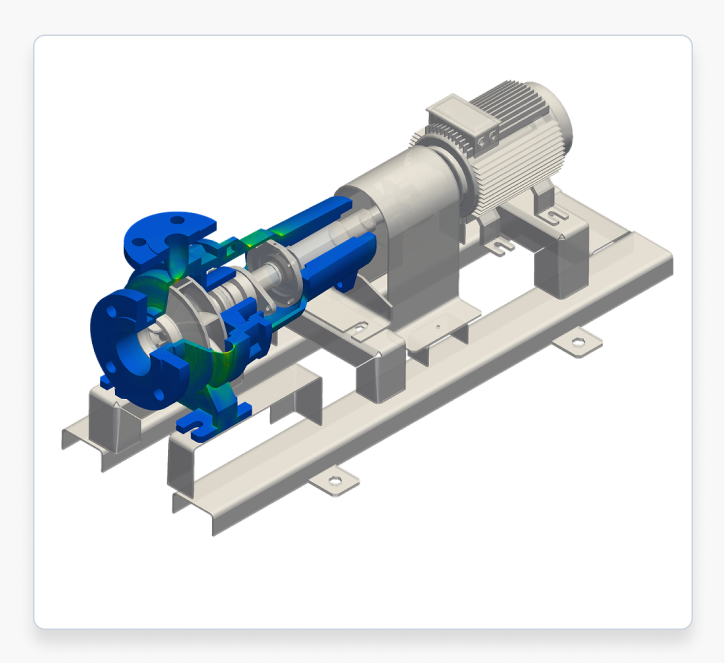
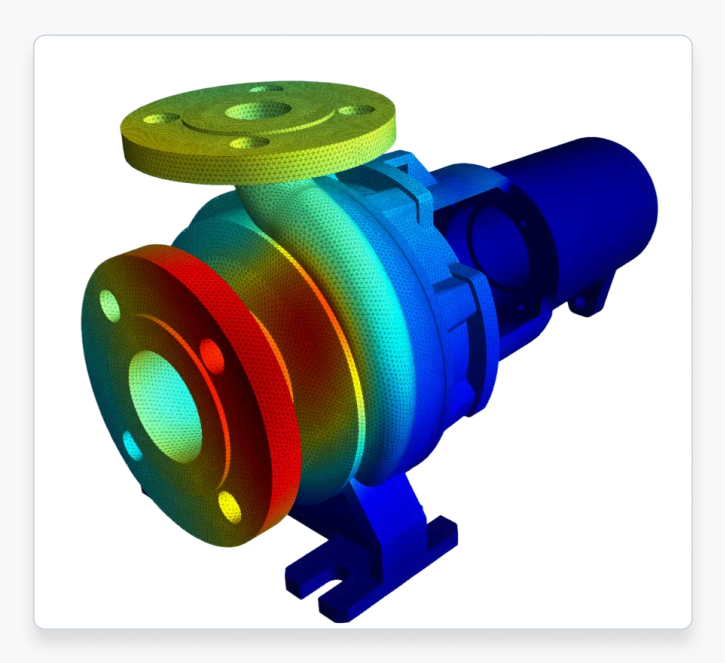
Natural Frequency & Mode Shapes
You’ll see the natural frequencies and mode shapes exhibited by your components or assemblies
Frequency Separation Check
You’ll understand the frequency margins between natural frequencies and excitation
Go/No-Go Assessment
You’ll know whether your design’s dynamic behaviour is acceptable or requires refinement before manufacturing or testing.

Trusted Engineering Expertise

200+ structural and dynamic analyses delivered across multiple engineering sectors

Specialisation in high-performance rotating machinery and precision mechanical systems

Experience with high-consequence components: rotors, housings, supports, frames, and machine structures
How It Works
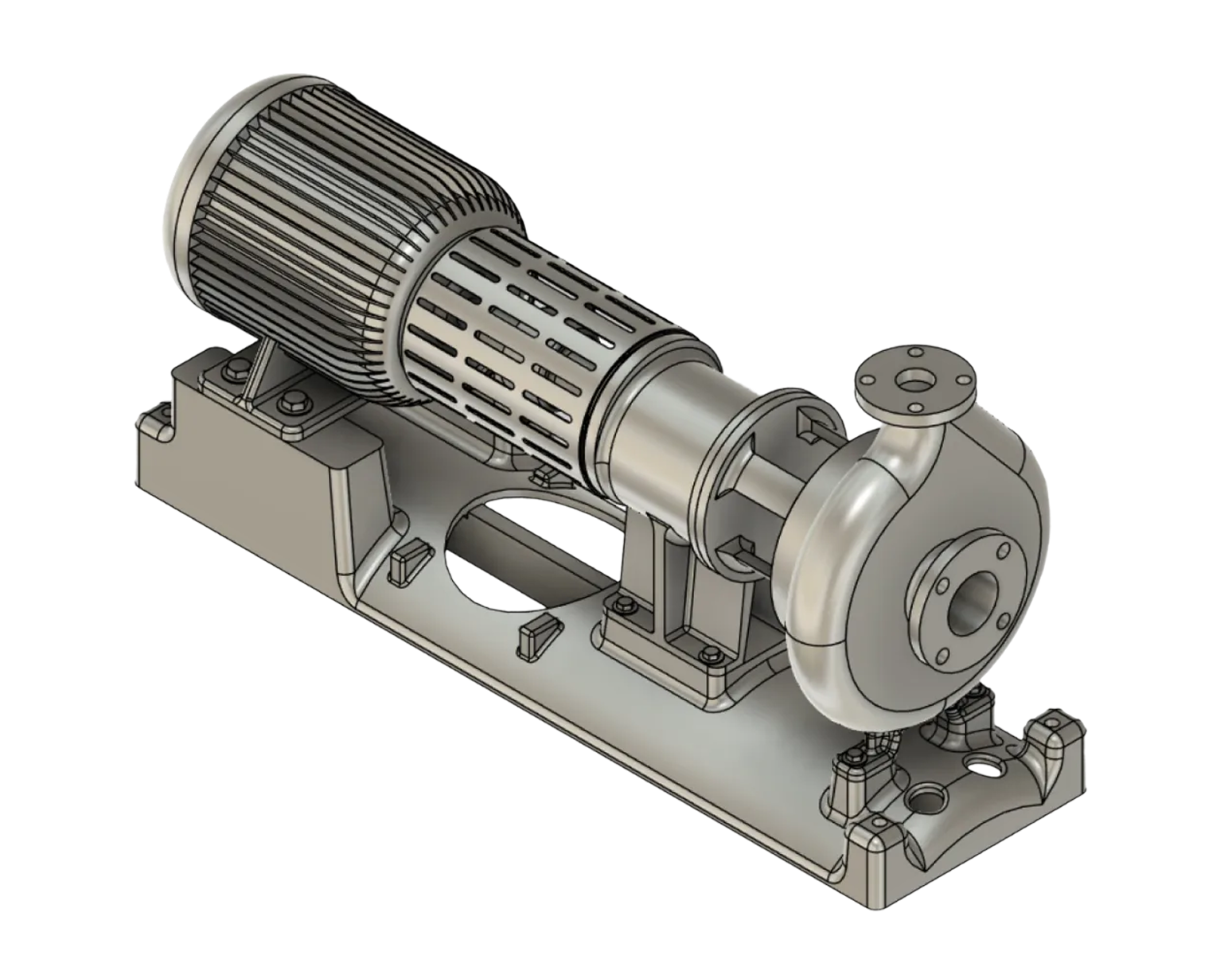
You provide the design
- CAD model
- Material specification
- Boundary condition
- Description of operational conditions, include excitation
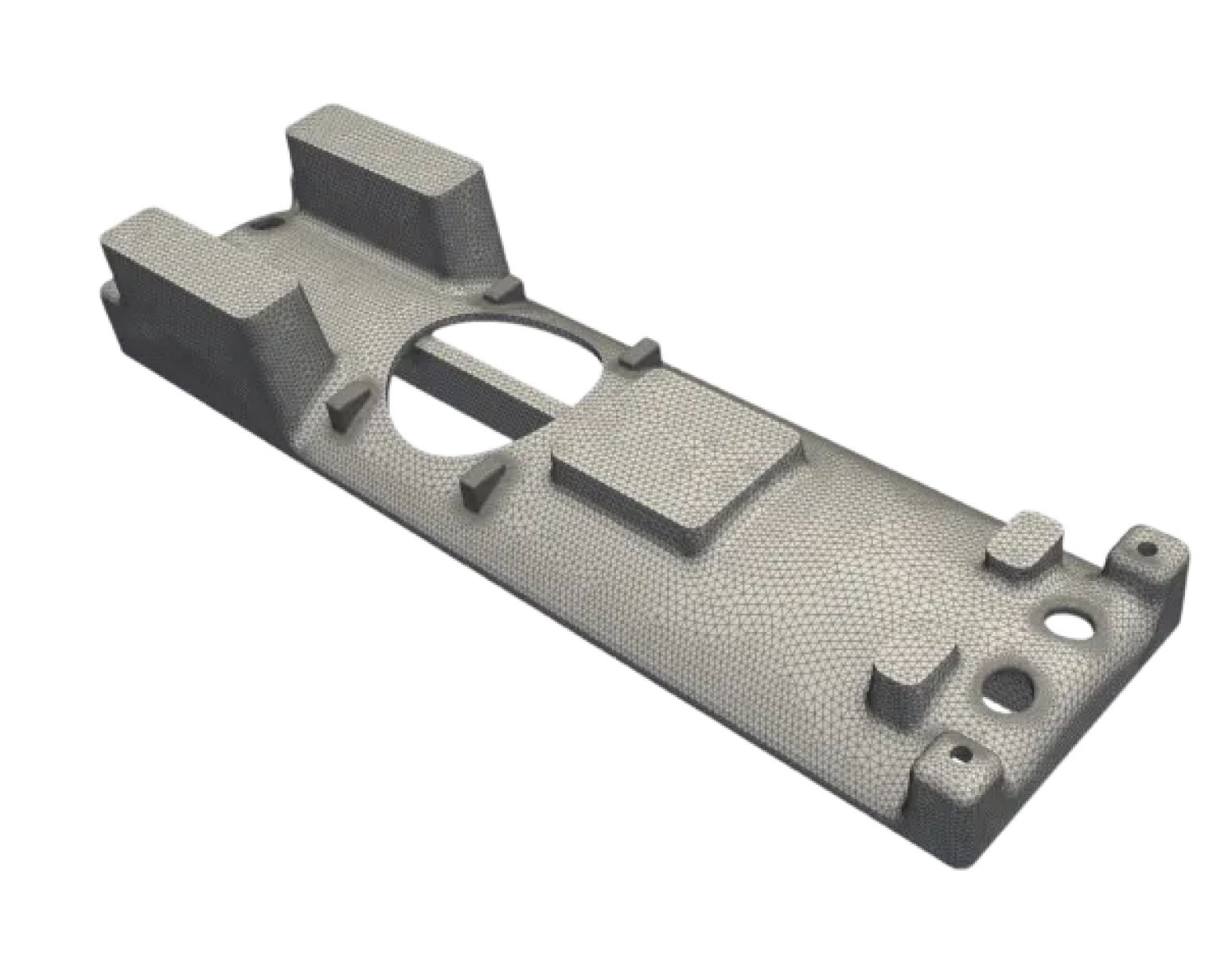
We Analyse
- Perform FEA on your model
- Compute a modal analysis
- Extract natural frequencies and mode shapes
- Check frequency separation against excitation
You Get
- A clear summary of your component’s modal characteristics
- An assessment of proximity to excitation frequencies
- A Go/No-Go decision on dynamic acceptability
- If requested, a follow-up with practical suggestions for improving vibration performance
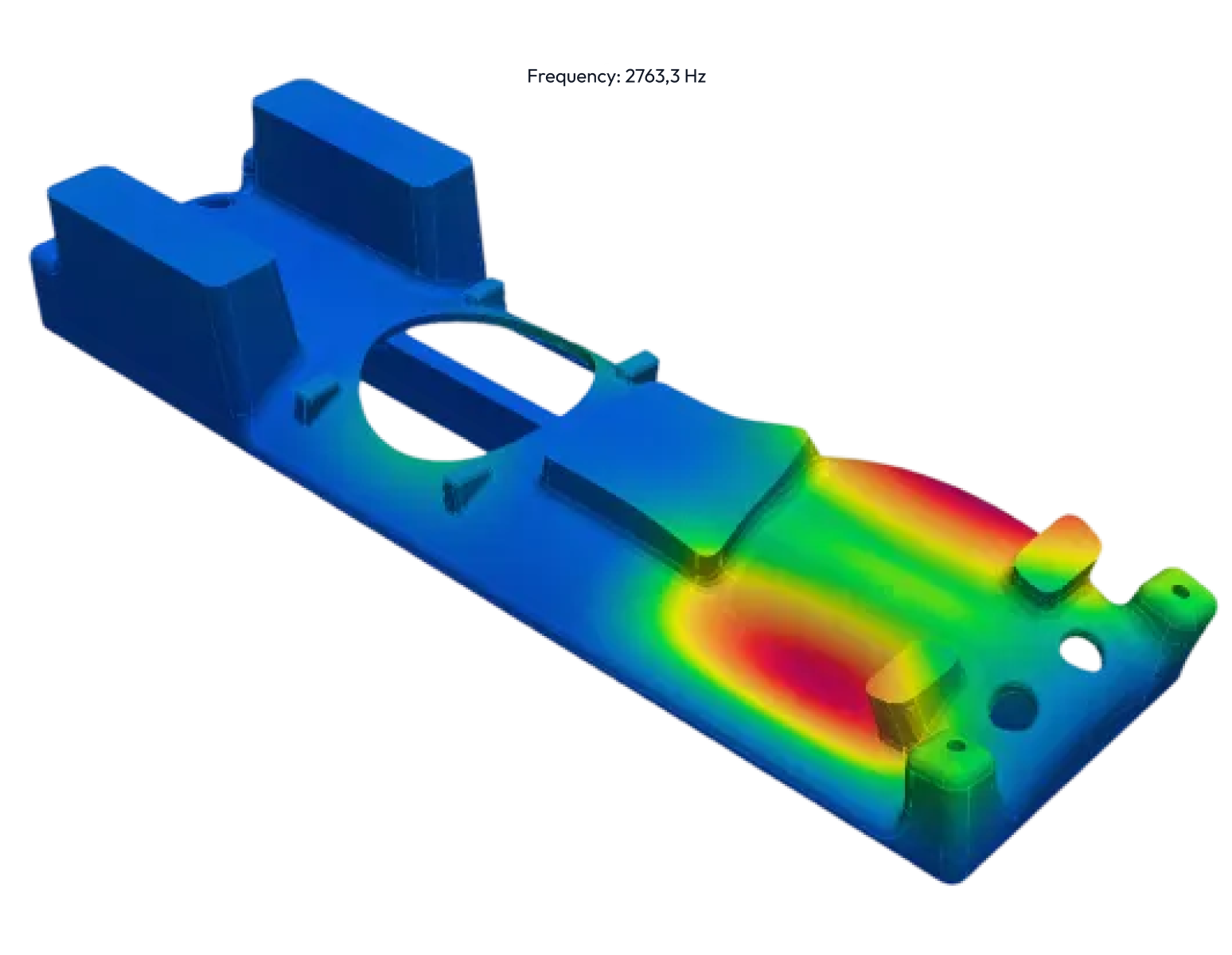
Use for Static & Quasi-Static Components Design Validation
This assessment is intended for structures that remain stationary but experience dynamic excitation by rotors, other machines, equipment, or transmitted vibration.
Typical parts include:
- Housings and casings, including pump and valve bodies
- Brackets and supports
- Frames and subframes
- Bases and machine skids
- Enclosures and panels
- Mounts, feet, and connection points
- Structural parts carrying motors, pumps, or other rotating equipment
Frequently Asked Questions
Do you need CAD model of my design? What formats do you accept?
Yes, a CAD model of your component or assembly is required. The model should be solid and watertight, meaning there should be no missing faces, small gaps or overlaps between components. Small features, such as tiny holes and fillets, are not critical for the analysis and do not need to be included.
We accept CAD models in many exchange formats:
- STEP: .step, .stp – Most robust exchange format (recommended)
- IGES: .iges, .igs
- Parasolid: .x_t, .x_b
- SMT: .smt
We can also accept native CAD formats:
- Fusion 360: .f3d, .f3z
- SolidWorks: .sldprt, .sldasm
- CATIA V5: .CATPart, .CATProduct
- PTC Creo: .prt, .asm
- NX: .prt
- Inventor: .ipt, .iam
Besides CAD model, what else is needed?
To perform the FEA analysis, we require the following information in addition to the CAD model:
- Material properties of your components
- Assumed boundary conditions, e.g., a set of holes is rigidly fixed
- Other relevant details about the component or assembly that are not captured in the CAD model, such as additional weight attached to the assembly that is not modeled
- Information about the frequency of excitation the component will be subjected to. In rotating machines, this is typically harmonics of the rotating speed, but it can also be other sources of excitation. If this information is not available, we can still perform the analysis, but we cannot provide a definitive go/no-go decision.
If any required information is missing, we will contact you via the provided email before starting the analysis.
How is the go / no-go decision made?
Is modal analysis enough, or do I need a more advanced dynamic analysis?
Modal analysis is often sufficient for many static components. Ensuring there is no risk of resonance significantly reduces the likelihood of high vibration and its associated negative consequences. This approach is also supported by API and ISO standards.
However, depending on how safety-critical the component is, system requirements or project risk appetite, it may be appropriate to perform additional dynamic analyses to understand the impact of resonance in more detail. These may include:
- Harmonic analysis to assess vibration amplitude at and around resonances
- Time-domain analysis to evaluate how changes in excitation affect the response
- Fatigue analysis to predict useful life under cyclic loading
We are happy to provide guidance on the most suitable approach for your specific project.
What assumptions are made in the analysis?
The FEA modal analysis assumes that components and assemblies behave linearly, meaning any non-linearity due to material properties, contacts, boundary conditions, or large displacements is insignificant. These assumptions generally hold true for most mechanical systems.
If we identify that the accuracy of the analysis may be affected because these assumptions are not fully met, we will state this in the report and discuss the potential impact.
What happens if the analysis identifies a resonance risk?
If the margin between the computed natural frequencies and the expected excitation frequency is less than 20%, there is an increased risk of resonance. This means the component or assembly may experience higher vibration response, which can lead to reduced fatigue life, loss of functionality, and ultimately repairs, redesigns, and revenue loss.
If a resonance risk is identified, we recommend redesigning the system to restore the margin. If redesign is not possible, the next step is to assess the impact of resonance in more detail. We can provide guidance in both scenarios.