FEA Services for mechanical systems and rotating equipment, ensuring structural integrity, reliability, and compliance through stress analysis, fatigue life prediction, buckling stability assessment, structural optimisation, and mechanical failure investigation.
Our structural analysis services help clients to make informed decisions that improve the safety, performance, and efficiency of their mechanical systems, rotating machinery, and engineered products. We specialise in FEA simulation and advanced structural analysis in support of mechanical design engineering projects.
Whether your goal is design verification, FEA design optimisation, or risk mitigation, our expertise in structural design and analysis enables us to solve the complex challenges of rotating equipment and mechanical systems while meeting the requirements of relevant industry standards.

Our expertise in finite element analysis (FEA), rotor dynamics and vibration is particularly relevant to complex mechanical systems across the following industries.
Structural analysis for onshore and offshore oil & gas facilities, including pressure vessels, piping systems components, heat exchangers, storage tanks, compressors, pumps, gas turbines and other systems. Our FEA services support equipment integrity, fatigue assessment, vibration mitigation, and compliance with relevant industry standards.
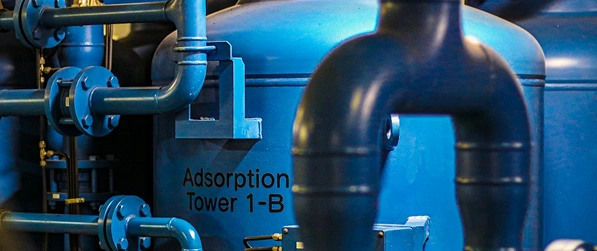
Structural and thermal analysis of reactors, pressure vessels, heat exchangers, storage tanks, agitators and other process systems. We help operators manage thermal stresses, cyclic loading, equipment modifications, and long-term asset integrity.
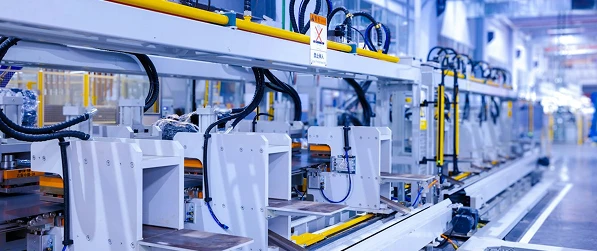
Design verification and optimisation of industrial machinery, machine frames, lifting systems, factory equipment and structural elements not suitable for code-based assessment, such as be-spoke sculptures, railings and frames. Our FEA services help improve structural performance, reduce weight, eliminate stress concentrations, and increase service life.

Structural, thermal, and vibration analysis for mechanical systems and rotating equipment, including wind turbines, gas and steam turbines, generators, and auxiliary plant equipment. We help operators improve reliability, extend fatigue life, and reduce unplanned downtime.
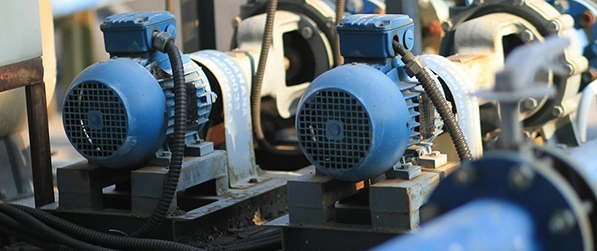
Structural analysis of pumps, pipelines, storage tanks, pump stations, treatment equipment, and other supporting structures. Our services help asset owners improve reliability, manage aging infrastructure, and reduce maintenance costs.
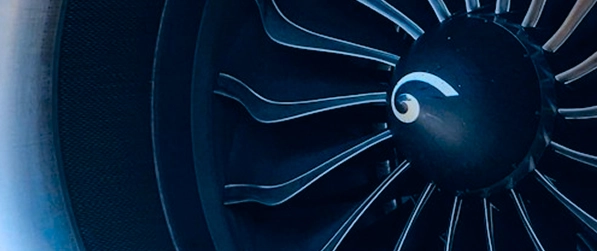
FEA-driven design verification and lightweight optimisation for airframes, engines, drivetrains, propulsion units, suspension systems, and other engineered components. We support stress, fatigue and buckling assessments under demanding operational loads.
Across these applications, our FEA assessment can be delivered in accordance with required standards, including API structural analysis, ASME, ISO, BS EN, Eurocodes and other applicable national requirements.
Looking for engineering analysis support for a project?
Talk to us about your requirements.
Each project is unique and tailed to specific needs for a client. See how general workflow looks like.
Clarification of the design requirements, available technical data, operating conditions, project objectives, and engineering decision the analysis needs to support. This typically results in the Statement of Work (SoW).
An FE model is developed, incorporating the systems geometry, materials, boundary conditions, loading and appropriate abstraction of structural behaviour.
Appropriate FEM simulations are performed to assess structural and dynamic behaviour, including static, modal, harmonic, fatigue, buckling, and rotordynamic analysis.
Model sanity checks are performed to ensure the produced results are numerically correct. Where test or field data is available, it may be used to compare, calibrate, or refine the analysis.
Results are reviewed against design requirements, operating limits, applicable codes, and engineering acceptance criteria.
The results are presented in a clear engineering report with relevant plots, structural analysis diagrams, conclusions, analysis assumptions, and practical recommendations for design changes.
View our anonymised finite element analysis report to understand how we present the analysis, results, and engineering recommendations.

Working with Resonant Engineering has greatly improved our machining fixtures. Their expert structural analysis led to design modifications that enhanced both strength and durability. Thanks to their solution, we now enjoy better precision, repeatability, and consistent performance. We highly recommend Resonant Engineering for their outstanding technical support.
Manufacturing Manager, Reontech
Our engineering capabilities are supported by industry-standard software for finite element analysis, vibration analysis, rotordynamics, and mechanical design. We are equally comfortable working within client-specified software environments where required.
Different Industries. Common Challenges. One Expertise.
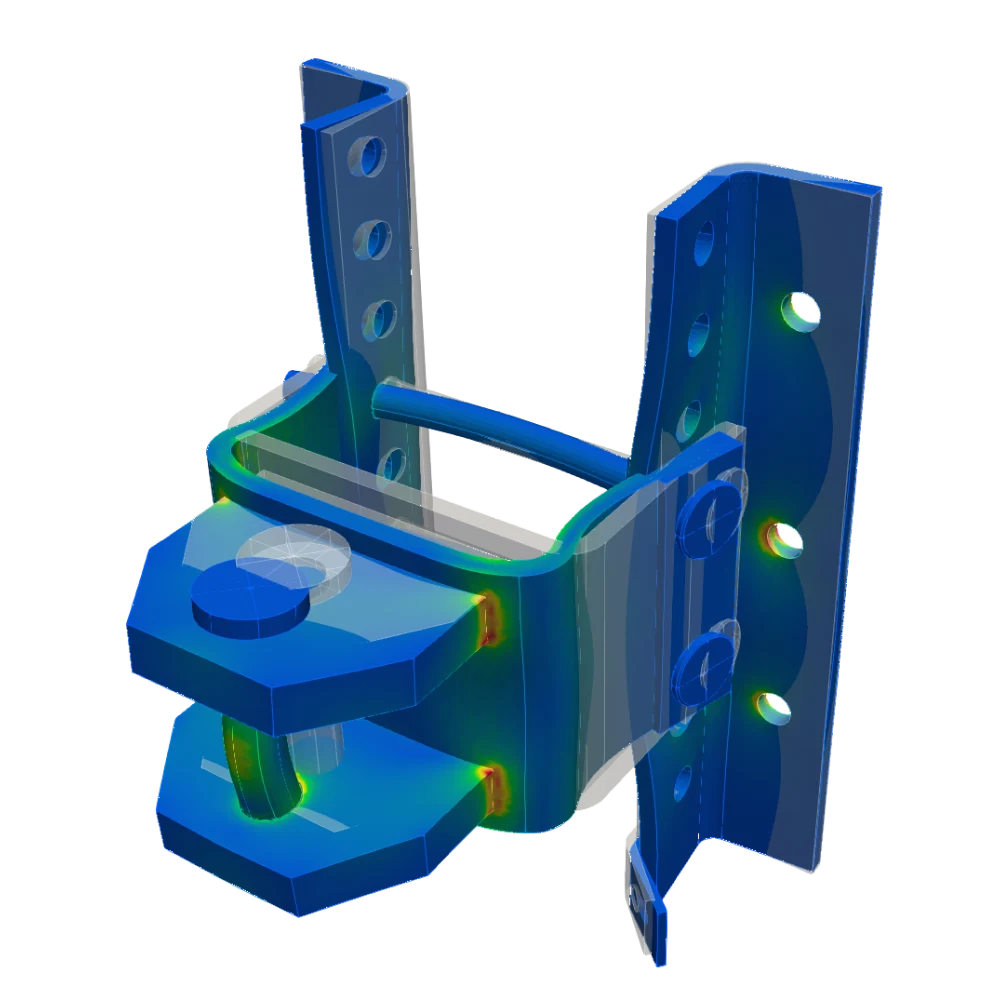
Structural Optimisation of Machining Fixtures for Strength and Durability Using Stress and Fatigue Analysis.
Stress, distortion and fatigue analysis of an API610 pump casing, assessing nozzle loads effects and structural integrity under operating conditions.
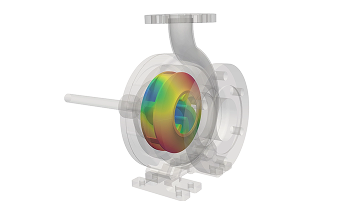
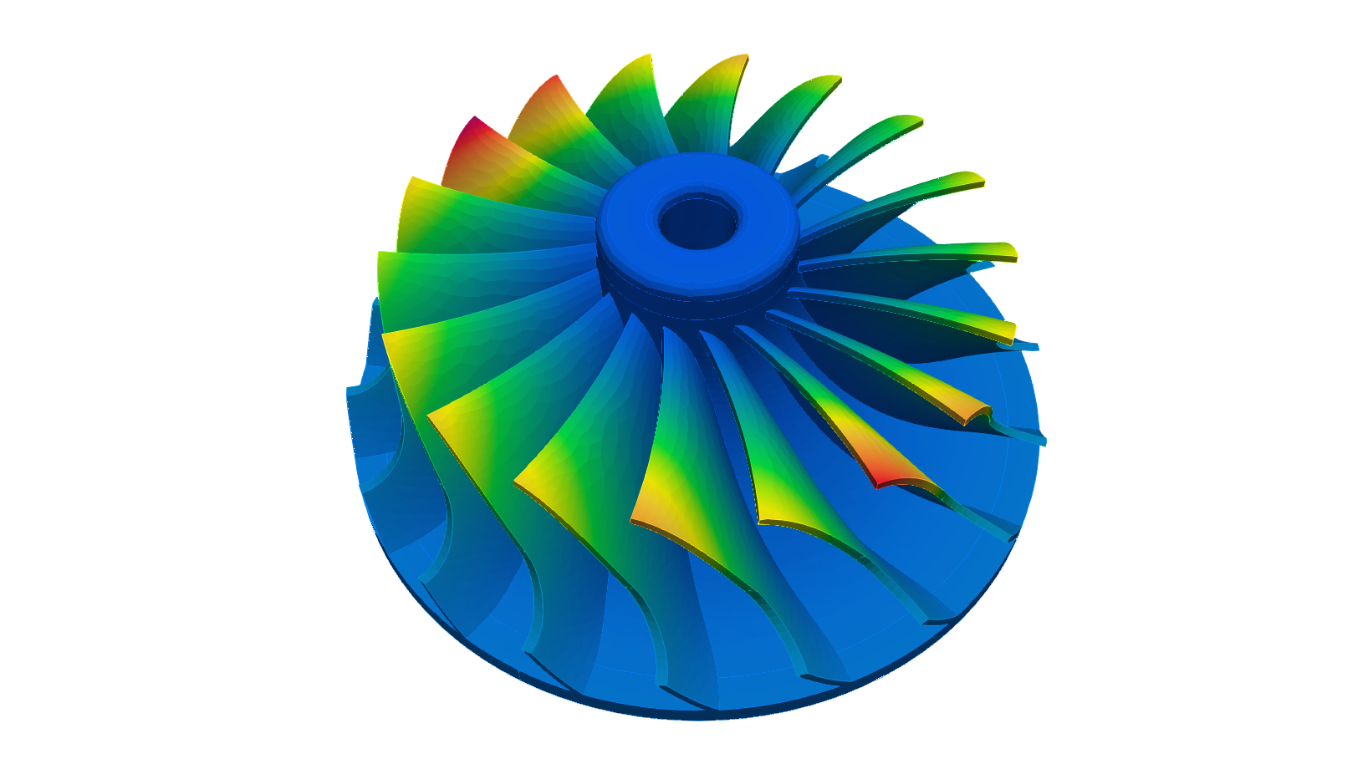
Impeller Modal Behaviour, Blade Passing Excitation Response, and ISO-aligned Fatigue Analysis
Looking for engineering analysis support for a project?
Talk to us about your requirements.
Typical range:
£1,000 – £5,000*
Typical range:
£60 – £90 / hour*
Agreement highly
dependent on requirements.
*Project pricing depends on the scope and complexity of the analysis, available inputs, and reporting deliverables. Once the scope is understood, we provide a clear quotation before modelling requirements work begins.
Send us the details and we provide a quotation.

Static and dynamic FEA are fundamental for understanding how your designs will perform under various loading conditions. Static analysis simulates how designs respond to steady, unchanging loads, guaranteeing that your design can uphold anticipated stresses and stay stable. For clients engaged in product development and innovation, this means you can move forward with confidence, knowing your design will meet safety and reliability standards.
Conversely, dynamic structural analysis evaluates how components respond to time-varying loads, such as vibrations or impact forces. This type of analysis is critical for clients in industries where products must endure fluctuating or transient forces. Our team provides dynamic structural analysis during product design which allows you to anticipate how your product will behave in real-world conditions and avoid costly design flaws.
Not all materials and structures behave linearly under operational conditions. At Resonant Engineering, we offer both linear and nonlinear FEA to give our clients a complete picture of their designs’ behaviour. Linear FEA is useful for materials that have predictable responses to loads, while nonlinear FEA addresses more complex behaviours like plastic deformation or large deflections.
Our advanced simulations ensure that potential failures or performance issues are identified early. We help you create more robust designs, improving the reliability and safety of your products before they reach the market.


Our stress analysis for mechanical design services in essential for identifying areas within a structure that may be prone to failure due to high stress concentrations. With the help of finite element analysis (FEA), we simulate real-world conditions to predict how your design will react to various loads and stress distributions.
Clients benefit from knowing exactly where design improvements are needed, leading to products that are stronger, more reliable, and cost-effective to manufacture. Our comprehensive structural assessment services help you avoid premature failure, lower repair costs, and reduce downtime in the future.
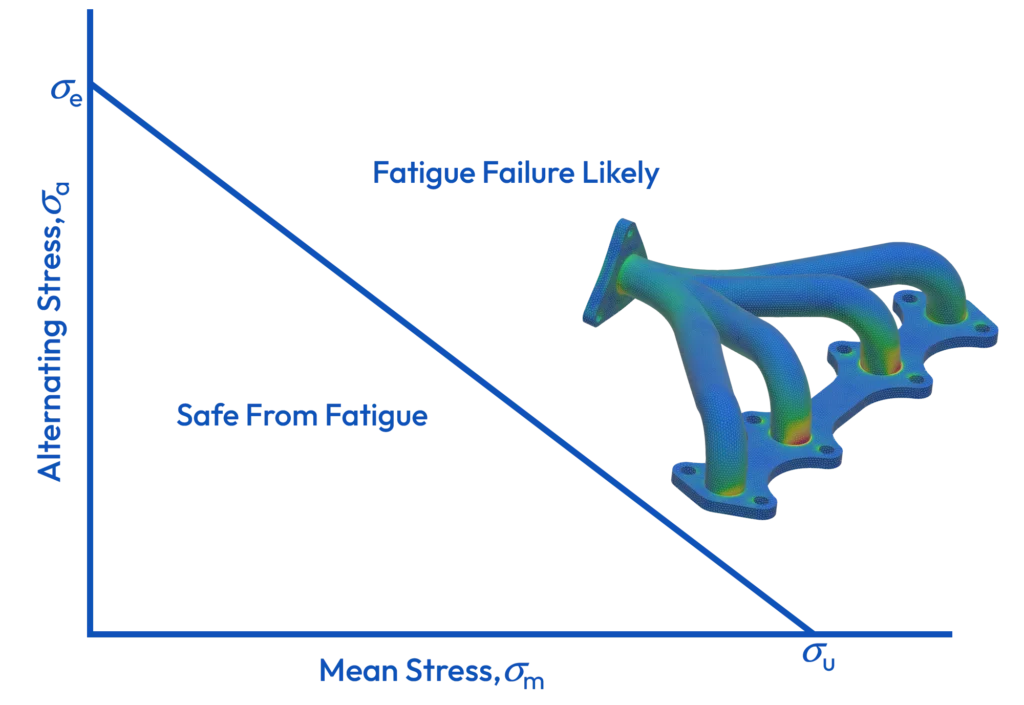
Fatigue failure, caused by cyclic loading, can lead to unexpected breakdowns in mechanical components. Our fatigue analysis services are designed to predict how long a component will last under repeated stress, ensuring that your product meets durability expectations.
This helps you to reduce material fatigue in new product designs by identifying potential weak points before manufacturing begins. Our expertise in finite element method allows clients to understand how their designs will wear over time, reducing the risk of failure in critical components and saving costs on repairs and replacements.

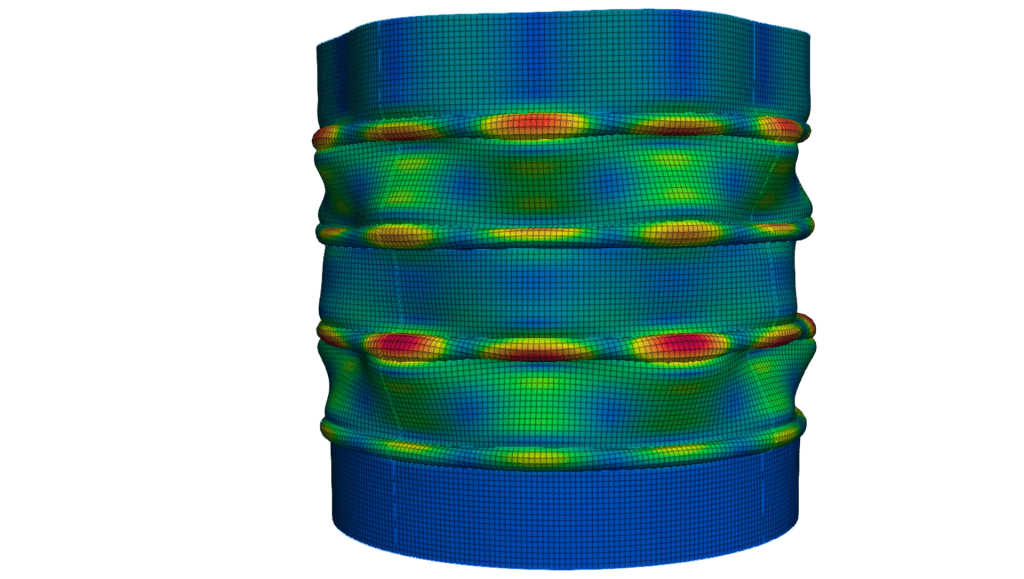
Buckling can cause catastrophic failures in structures subjected to compressive loads. Our buckling analysis ensures that your products will maintain their stability, even under challenging conditions. Whether you’re designing thin-walled structures or long beams, we provide structural performance simulation to assess your product’s resistance to buckling.
By using advanced FEA, our clients can prevent instability issues, enhance product safety, and optimize material usage. Our design validation using structural analysis ensures that your products can withstand real-world pressures without compromising on structural integrity.
At Resonant Engineering, we help clients perform structural optimisation by refining their designs to reduce weight, minimize material use, and enhance performance. Using finite element analysis (FEA), we assess every aspect of your design to identify areas where improvements can be made without sacrificing strength or reliability.
Clients benefit from design assessment services that lead to cost savings, better product performance, and faster time to market. Our innovative product design structural solutions empower you to deliver better products to your customers, improving both your reputation and your bottom line.
Rotating machinery is prone to vibration and stability issues that can influence performance and life span. Our rotor dynamics analysis provides insights into how rotating components, such as shafts and turbines, will behave under operational conditions. This analysis is especially important for clients involved in complex mechanical systems where failure can lead to significant downtime or damage.
By resolving rotor dynamics issues early through our mechanical design validation services, clients can ensure smoother operations and avoid costly failures. Computer-aided engineering (CAE) tools enable us to simulate real-world conditions, helping you optimize your design and ensure long-term reliability.