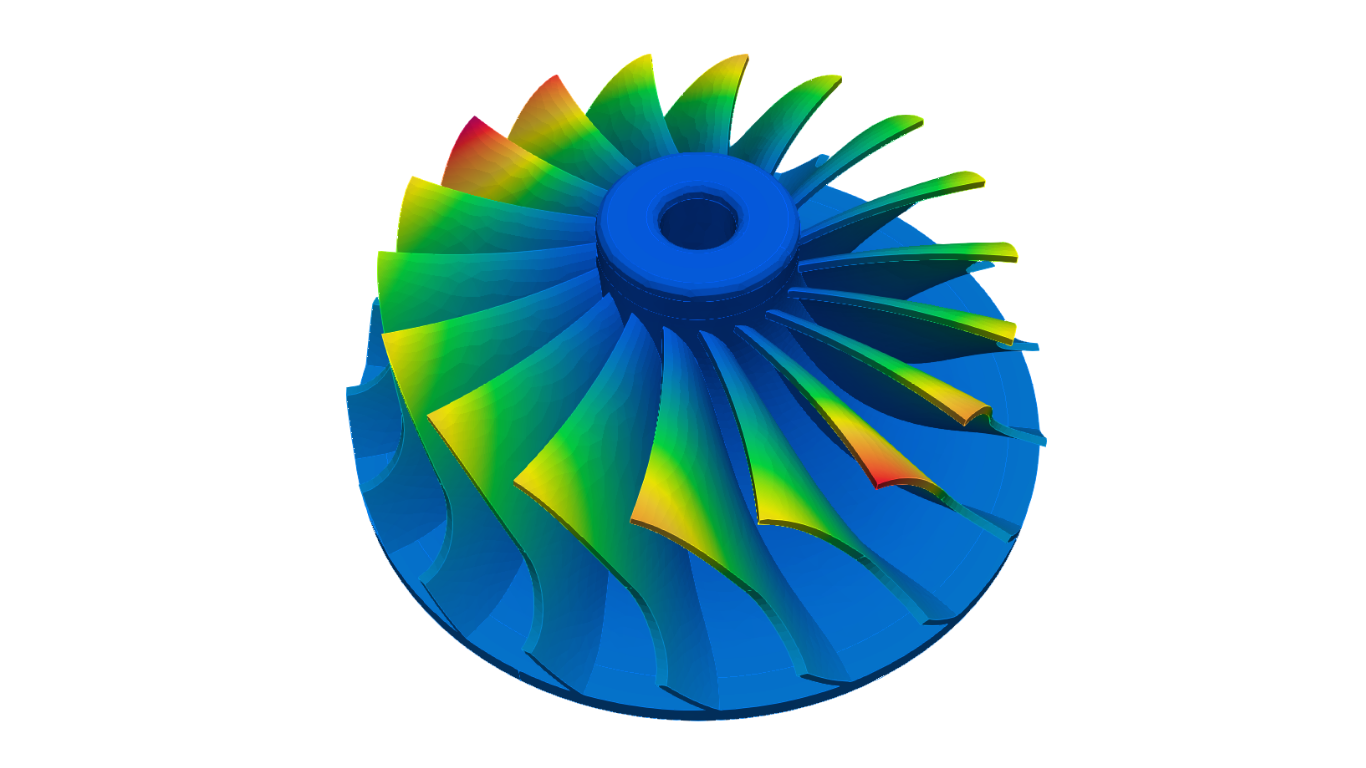
Buckling (Stability) Analysis
Buckling (Stability) Analysis

What is Buckling?
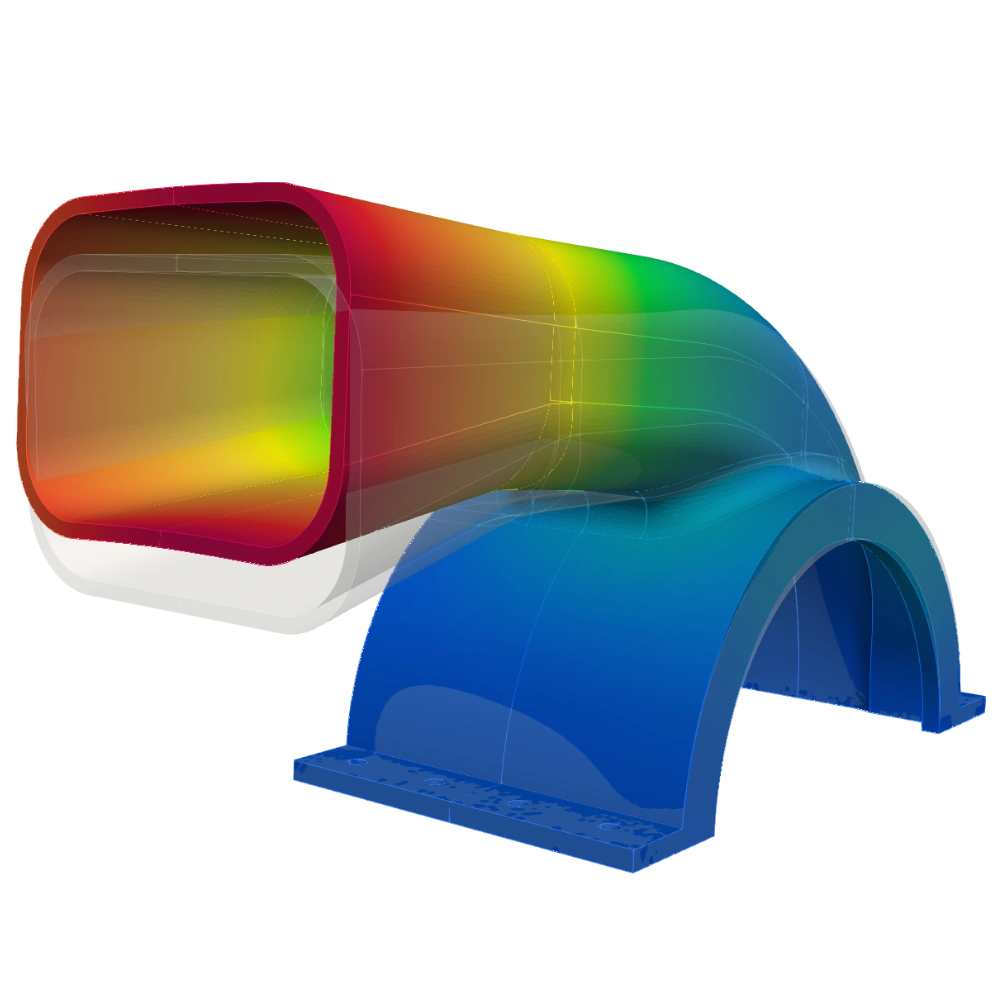
When a structure is subjected to compressive loads, failure can occur due to stresses exceeding material limits—evaluated through stress analysis—or buckling, a sudden loss of structural stability. Buckling is a rapid change in the shape of a structure triggered by a critical compressive load. After this point, further load increases can cause significant and unpredictable deformations, often leading to irreversible structural failure.
Buckling can occur at stress levels significantly lower than a material’s yield stress. The fact makes buckling a crucial factor in design considerations. It commonly affects thin-walled structures under compressive loads, such as beams, plates, and shells. Recognizing and addressing buckling risks is essential to ensure the safety and durability of your designs.
Linear Buckling
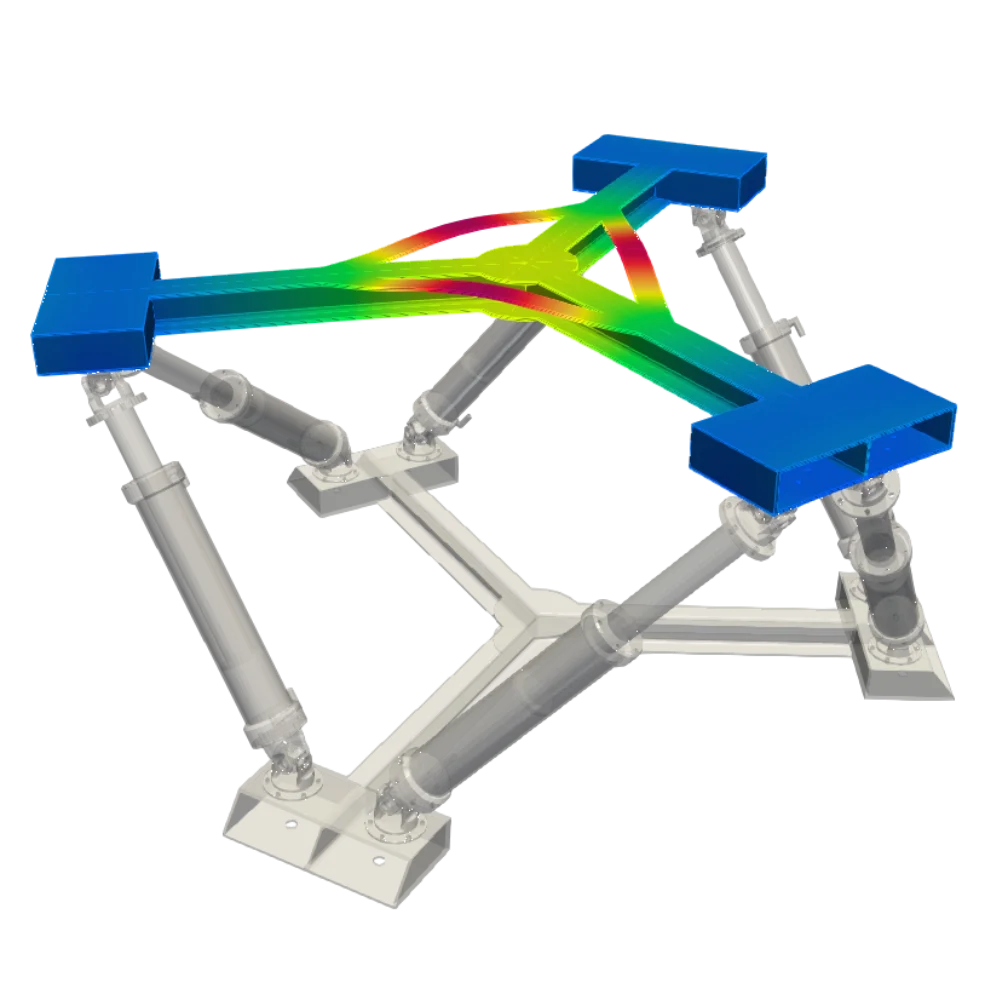
Linear buckling analysis, also known as Eigenvalue Buckling or Euler Buckling analysis, calculates critical load factors and associated buckling modes. The critical load factor is a multiplier of the applied load that leads to loss of stability, and the buckling modes represent deformation shapes at failure.
This analysis is mathematically similar to modal analysis, solving an eigenvalue problem. It does not provide stress values, so performing a separate stress analysis is essential. Linear buckling modes indicate potential failure shapes but not realistic displacement values, as buckling leads to collapse rather than stable deformation.
Multiple buckling modes are typically identified. While failure usually occurs at the lowest critical load factor (first mode), analysing higher modes can guide structural improvements.
Non-Linear Buckling (Stability) Analysis
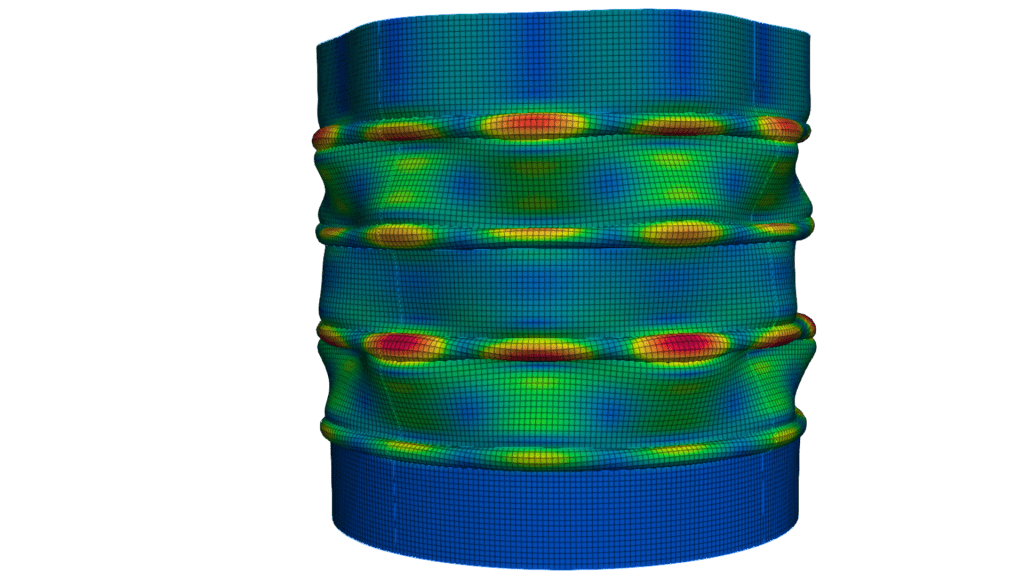
In non-linear buckling (stability) analysis, loads are applied gradually in small steps, with equilibrium recalculated for each deformed shape. When the structure becomes unstable, the numerical solution fails to converge, identifying the buckling load just before this instability. This type of analysis can also predict phenomena like snap-through buckling, providing a comprehensive understanding of structural stability under complex conditions.