Audio Design Services: Vibration Analysis for Hi-Fi
Case Study: How Finite Element Simulation Delivered Vibration-Isolating Mat to Enhance Audio Fidelity
Industry
High-End Audio Hardware
Challenge
Developing a turntable mat that reveals hidden detail, precision, and clarity in vinyl playback — beyond the limits of traditional flat-surface designs
Solution
An FEA-optimised hybrid design using embedded compliance-tuned pads and silicone damping engineered to both absorb and isolate vibration
Results
Lower stylus vibration for tighter bass, crisper dynamics, and stable imaging — rivalling the performance of higher-priced premium mats
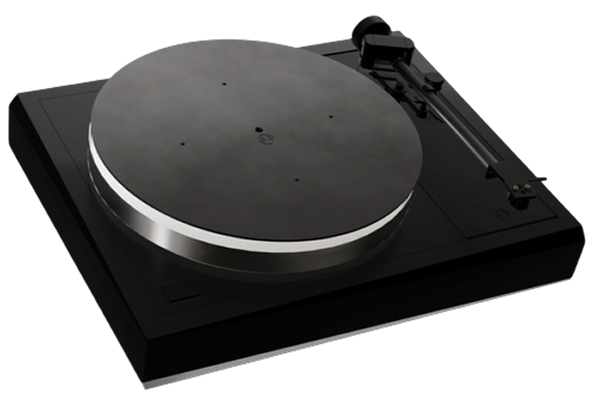
This audio design services case study documents the technical development behind the Stack Audio SERENE Mat — an FEA-optimised vibration-isolating turntable mat engineered to improve hi-fi playback fidelity.
For nearly a decade, Stack Audio experimented to reduce unwanted vibration in turntable playback — the kind that distorts needle tracking and muddies audio detail. They tested every traditional material: rubber, felt, cork, silicone — but none delivered any real improvement. The reason? Relying solely on materials for damping allows vibration to pass through, even though some energy is absorbed.
The Innovative Idea
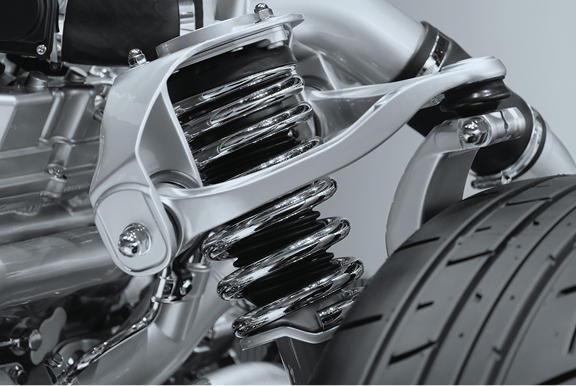
The breakthrough came from an unexpected source: a silicone popper toy. It sparked a new approach — using stiffness to isolate vibration, like a miniature suspension system. But turning that idea into a product within the strict 5mm height limit for turntable compatibility required engineering precision.
Collaboration with Resonant Engineering
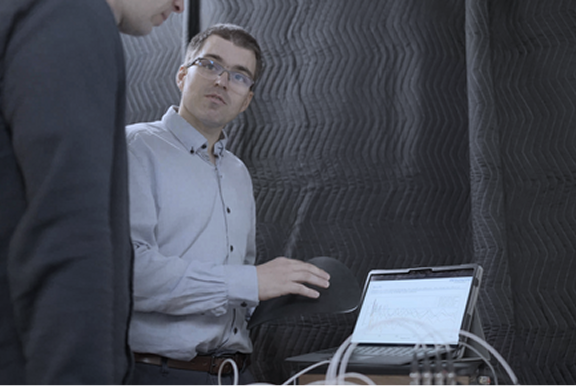
Resonant Engineering was brought in to collaborate on definition, simulation and testing of the design— defining stiffness, placement, and pad geometry to deliver a production-ready solution. Translating the concept into an engineered product required specialist vibration consultancy expertise.
Resonant Engineering’s expertise in vibration control has been invaluable. They provide superb
advice and analysis that is helping us develop class leading products.
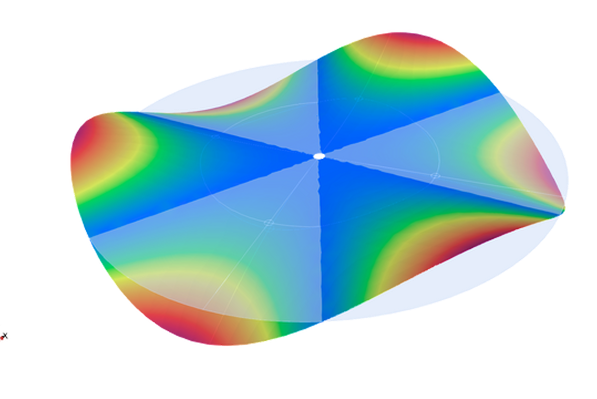
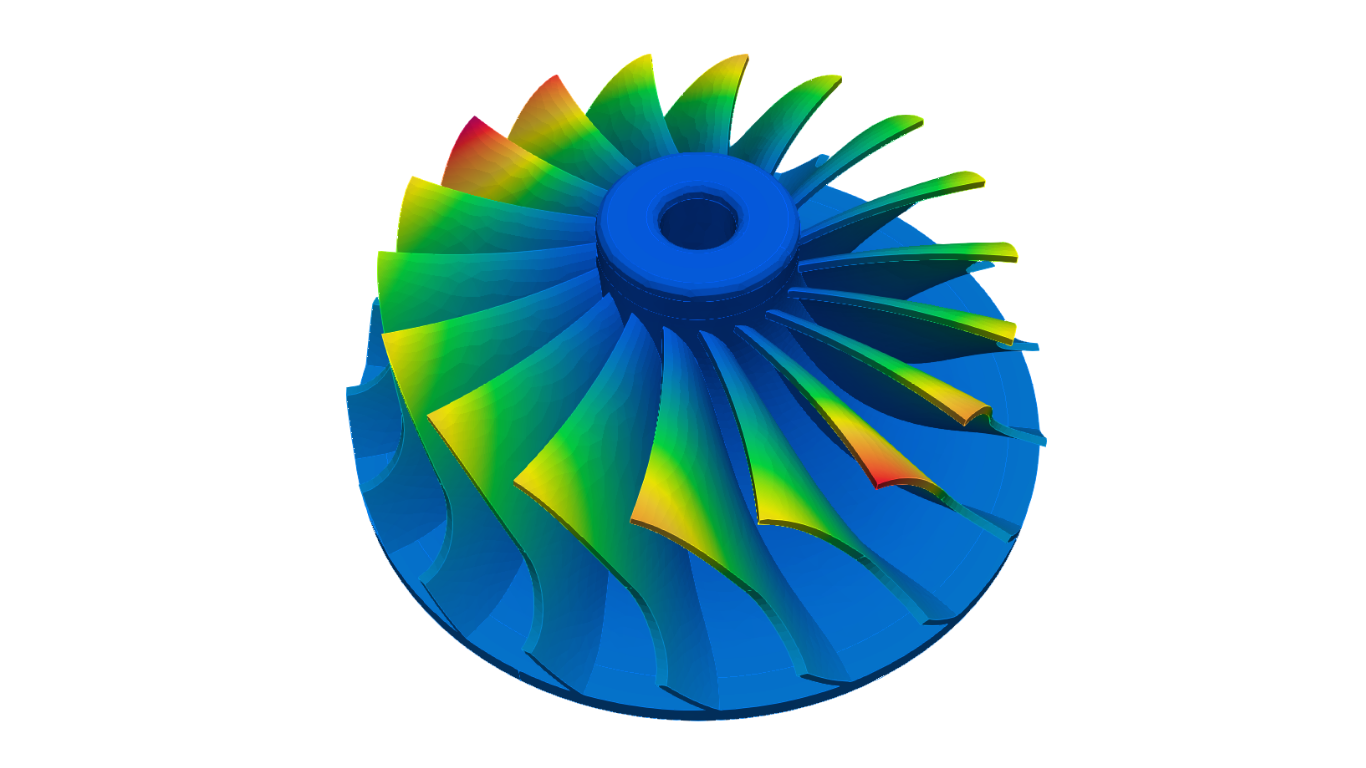
Using finite element analysis (FEA), Resonant Engineering modelled the system to track how vibration propagated to the stylus. To replicate real-world conditions, we used vibration data from a range of turntables to simulate worstcase excitation, not just ideal lab conditions.
Response surface analysis allowed us to precisely map how each parameter affected vibration at the record’s surface — and to pinpoint combinations that consistently minimised resonance at critical audio frequencies.
We analysed 29 design configuration variants, adjusting:
Pad stiffness
Geometry
Placement
Pad stiffness
Geometry
Placement
Our FEA-optimised design was benchmarked against multiple commercial mats, confirming its superior vibration isolation.
Solution
The final design — released as the SERENE Mat — was an innovative structure: a formulated silicone damping core with four miniature pads embedded on the surface, each tuned for optimal compliance.
By focusing the record’s weight onto these contact points, the mat disrupted the vibration path between platter and record — blocking vibration transfer. This let the mat both absorb and isolate vibration — a structural advantage over traditional flat, damping-only designs.
Results
Testing confirmed the SERENE Mat significantly reduced vibration at the record surface — outperforming every mat it was benchmarked against. Simulations and real-world tests showed consistently lower amplitudes compared to other designs.
The product quickly became a flagship in Stack Audio’s portfolio — earning a 10/10 rating from a respected UK reviewer of vinyl accessories, The Audiophile Man, and consistent praise from the hi-fi community. Listeners noted tighter imaging, lower noise floor, and greater detail, all without altering the character of their system.
Individual voices and instruments have more precise edging and depth… The 3D impression or plasticity improves. It's primarily a gain in microdynamics. Once you’ve heard it, you won’t want to go back.
In high-end audio, uncontrolled vibration creates significant product quality issues by introducing acoustic noise that obscures the fine details hi-fi systems are designed to reveal.
Structural vibrations depend heavily on numerous factors, including geometry, materials, and boundary conditions, making trial-and-error prototyping inefficient where microphonics or enclosure flex can mask subtle audio detail.
For products where structural behaviour affects acoustic performance, simulation-led design underpins a rigorous development process. Finite Element Analysis (FEA) models vibration propagation through product structures pre-prototype, identifying problem frequencies, evaluating geometry changes, and comparing design variants systematically and efficiently.
For professional audio design teams, this means engineering decisions are made on evidence rather than iteration. This approach yields major savings while reducing development timelines.
Beyond turntables, vibration and FEA-based acoustic analysis is increasingly applied across hi-fi categories —including loudspeaker enclosures, amplifier chassis, DACs, and preamplifiers — to preempt sound-degrading resonances before products are built.
Simulation-led approaches characterise modal frequencies and vibration transmission paths upfront, enabling audio design experts to optimise damping strategies, bracing topologies, and material combinations — including non-intuitive solutions that expand the innovation space.
Chat with our engineering team
1
Hi, welcome to Resonant Engineering
Have a question about our services?
Click the button to chat with our engineering team on WhatsApp.