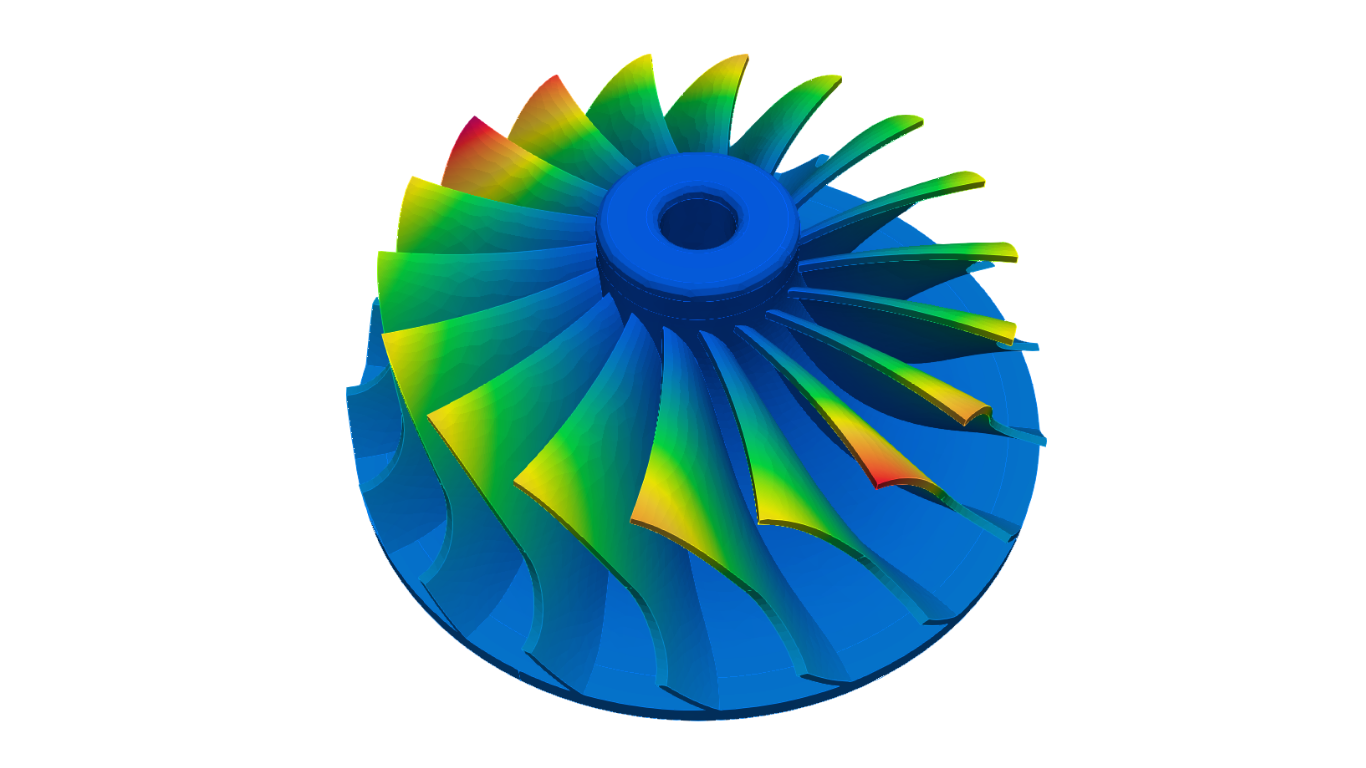
Finite Element Analysis (FEA) is one of the most widely used engineering simulation techniques for evaluating the strength, stiffness, durability, vibration, and thermal performance of mechanical systems, structures, and products before they are built. Despite being used extensively across a range of industries, including aerospace, energy, automotive, and industrial equipment, many engineers and decision-makers are not entirely clear on what FEA actually does or how reliable the results can be.
This article explains what finite element analysis is, how it works, what information is needed to perform an effective study, and when it can provide valuable engineering insight. If you are designing a new product, structure, or mechanical system, our finite element analysis services help ensure structural integrity, reliability, and compliance before manufacturing and testing begins.
What Is Finite Element Analysis (FEA)?
Finite Element Analysis (FEA) is a numerical simulation method used to predict how a component, assembly, or full system will behave under real-world operating conditions. Engineers use FEA to perform stress analysis, estimate deformations, natural frequencies, temperatures, fatigue life, stability and many other structural characteristics before physical prototypes are manufactured.
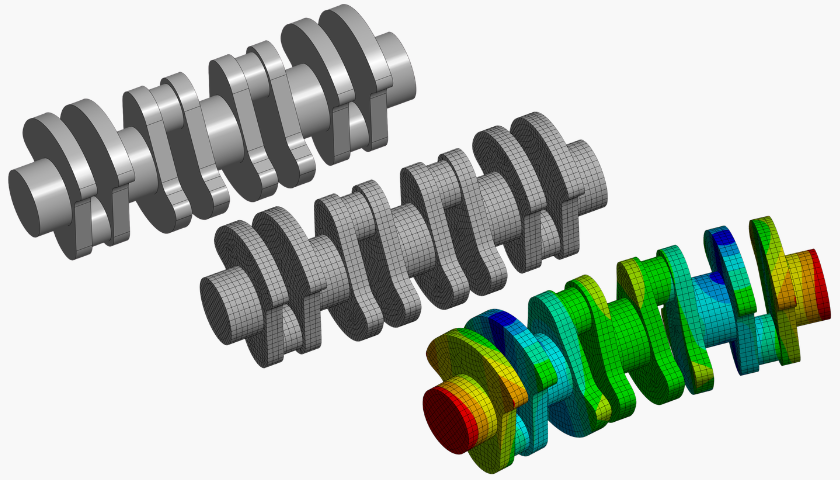
When performing Finite Element Analysis, the geometry is discretised into a large number of interconnected finite elements, forming a computational mesh. Governing equations representing the structural behaviour of each element are assembled into a global system and solved simultaneously. This provides an approximation of the response of the entire structure, enabling the analysis of complex geometries and loading conditions that would be impossible to evaluate using analytical methods alone.
Today, FEA forms a key part of product development across many industries. It allows engineers to identify potential design issues early, optimise designs, reduce development costs, and increase confidence before committing to manufacturing or testing. The methodology is widely recognised throughout industry and supported by professional organisations such as NAFEMS, which promotes best practices in engineering simulation and analysis.
How Does FEA Analysis Work?
An FEA study typically begins with a three-dimensional model of the component or structure being analysed. The geometry may come directly from a CAD model or be created specifically for the simulation. The engineer then defines the material behaviour and properties, such as elastic modulus, density, thermal conductivity, or fatigue characteristics, depending on the problem being investigated.
The model is then meshed, resulting in thousands or millions of finite elements. The quality of this mesh plays a significant role in the accuracy of the results. Areas with high stress gradients, complex geometry, or important interfaces often require a finer mesh to accurately capture the behaviour of the structure.
Once the mesh has been created, loading conditions and constraints are applied. These may include forces, pressures, accelerations, temperatures, contacts, bolt preloads, or vibration excitation. The specialist simulation software, such as ANSYS, then solves the governing equations and calculates the structural response. Finally, the results are reviewed and interpreted by the analyst to determine whether the design meets its requirements or requires modification.
When to Use Finite Element Analysis
FEA is most valuable when answering engineering questions that cannot be solved with confidence using simple calculations or engineering judgement alone. It is commonly used to determine whether a design will withstand its operating loads, identify highly stressed regions, assess vibration behaviour, evaluate fatigue life, or investigate the root cause of a failure.
The technique is particularly useful during the design phase, where simulation can identify issues before manufacturing begins. It is also widely used before physical testing to predict likely outcomes, optimise test programmes, and reduce development costs. In many projects, FEA and testing work together, with simulation guiding design decisions and physical testing providing final validation.
What Inputs Are Needed for an FEM Analysis?
The quality of an FEA study depends heavily on the quality of the information provided. While requirements vary depending on the type of analysis being performed, the following inputs are typically required:
- CAD geometry or engineering drawings
- Material properties
- Operating loads and load cases
- Boundary conditions and constraints
- Design requirements or acceptance criteria
- Environmental conditions (temperature, pressure, vibration, etc.)
- Relevant industry standards or certification requirements
- Any test data (if already available) that can be used for validation
- Specific engineering questions the analysis should answer
Providing accurate input information about loading and boundary conditions is often more important than providing a highly detailed CAD model. Even the most sophisticated simulation cannot compensate for unrealistic assumptions about how a structure is loaded or supported in service. This is where specialist FEA expertise, engineering judgement, and practical experience become essential.
Frequently Asked Questions
FEM (Finite Element Method) is the mathematical technique used to solve engineering problems, while FEA (Finite Element Analysis) is the practical application of that method to a specific design or engineering challenge. In everyday engineering practice, the terms are often used interchangeably, although FEM technically refers to the underlying mathematics and FEA refers to the complete simulation process.
Finite element analysis can be used to investigate a wide range of structural, thermal, and dynamic problems. Common applications include stress assessment, deflection prediction, vibration analysis, fatigue evaluation, thermal behaviour, contact mechanics, bolt preload assessment, impact loading, failure, and buckling investigations. The technique is suitable wherever understanding the physical behaviour of a component or structure is important for design decisions.
At a minimum, an analyst typically requires a description of the engineering problem, the geometry of the component, material information, and details of the loads and constraints acting on the structure. Additional information such as environmental conditions, test data, operating scenarios, and other design requirements can often improve the quality and reliability of the results.
The duration depends on the complexity of the problem and the level of detail required. A simple linear static assessment may be completed within a short period, while large nonlinear, fatigue, or vibration studies involving multiple load cases can require substantially more effort. In most cases, the largest portion of the work is not the computer solve time itself, but the preparation of the model, verification of assumptions, and interpretation of the results.
Not necessarily. A CAD model is often the most efficient starting point, but many FEA studies can begin using engineering drawings, sketches, dimensions, photographs, or existing documentation. In some cases, the analysis model is rebuilt specifically for simulation purposes, particularly when simplifying complex geometry helps improve efficiency without affecting result accuracy.
Written by