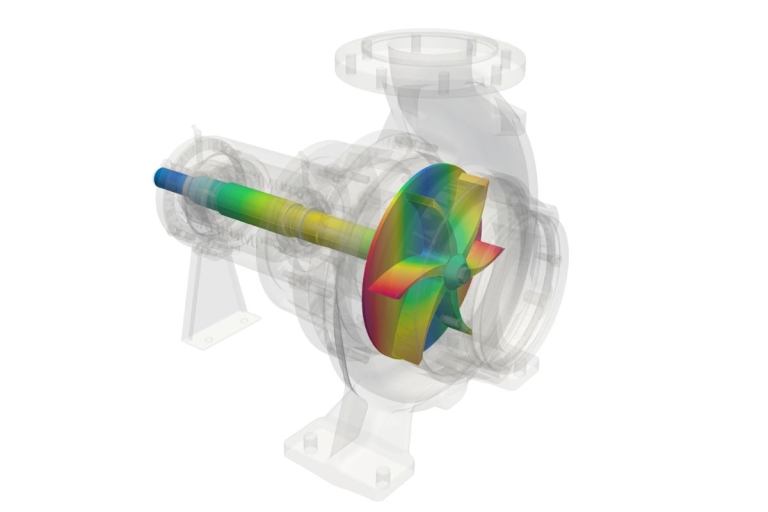
Centrifugal Pump Rotor: API 684 Rotordynamic Analysis of an Overhung Impeller
Technical Study: Rotordynamic analysis to API 684 standards, evaluating rotor stability, critical speeds, and vibration for reliable performance of rotating equipment.
Industry
Oil & Gas | Chemical Processing | Water Treatment
Challenge
Overhung impellers are sensitive to unbalance, hydraulic excitation, and bearing properties, requiring verification that vibration levels remain acceptable across the operating range.
Solution
API 684 rotordynamic analysis assessing critical speeds, stability margins, and unbalance vibration response.
Results
Stable response with low vibration and adequate separation margins, indicating reliable operation with low risk of vibration-related reliability issues
Challenge
Technical Background
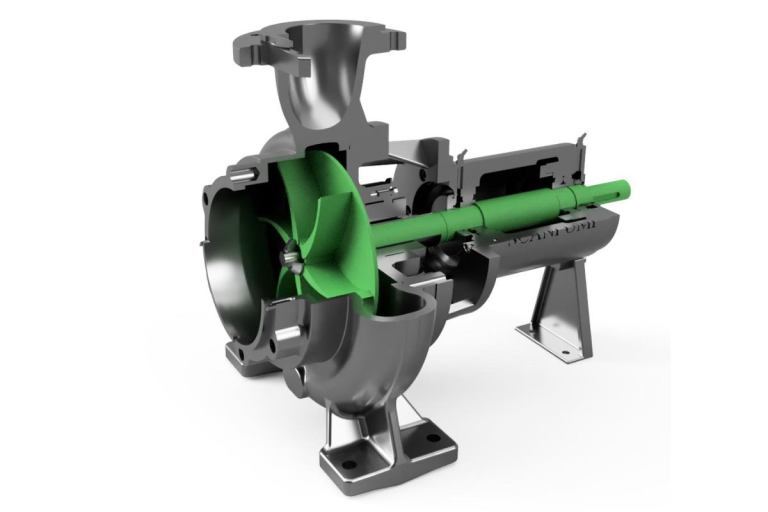
Overhung centrifugal pump rotors exhibit increased sensitivity to dynamic effects due to the cantilevered impeller mass located outboard of the nearest bearing. This configuration amplifies the influence of residual unbalance, hydraulic excitation, and bearing dynamic properties on shaft response. As a result, elevated vibration levels may occur if critical speeds fall near the operating range or if damping is insufficient. Uncontrolled vibration can affect mechanical seal performance, reduce bearing life, and increase the risk of fatigue or rotor–stator interaction, ultimately impacting reliability and operational stability.
Industry Practice
In industrial practice, rotor dynamics of centrifugal pumps (and other rotating equipment) is evaluated using a combination of API 610 and API 684 guidelines. API 610 defines vibration limits, mechanical requirements, and overall pump integrity expectations, while API 684 provides detailed methodology for rotordynamic analysis, including critical speed determination, stability assessment, and unbalance response evaluation. These standards require verification of adequate separation margins, acceptable vibration amplitudes, and stable rotor behaviour, ensuring that the system operates reliably across its intended speed range under realistic support and excitation conditions.
Approach
Rotor Dynamic Analysis of Overhung Pump Rotor
Engineering followed a structured analysis workflow:
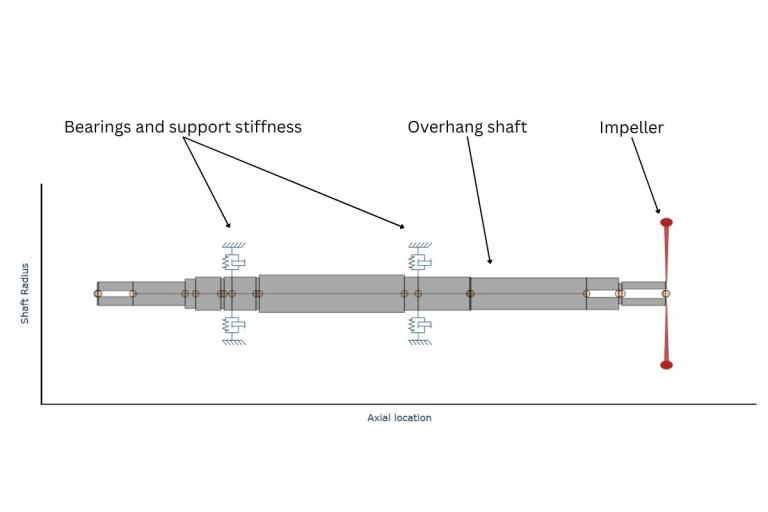
Geometry idealisation and 1D model development – Rotor represented using beam elements with lumped impeller mass and bearing stiffness/damping properties.
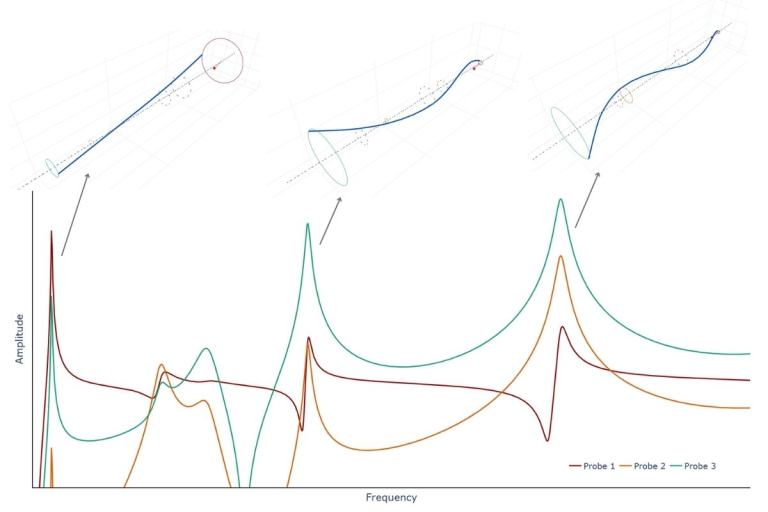
1D rotor dynamic analysis – API 684–aligned evaluation including undamped and damped natural frequencies across operating and overspeed range.
Campbell diagram generation – Identification of critical speeds and assessment of separation margins relative to operating range.
Unbalance response analysis – Forced response simulation performed to quantify vibration amplitudes at the impeller and along the shaft.
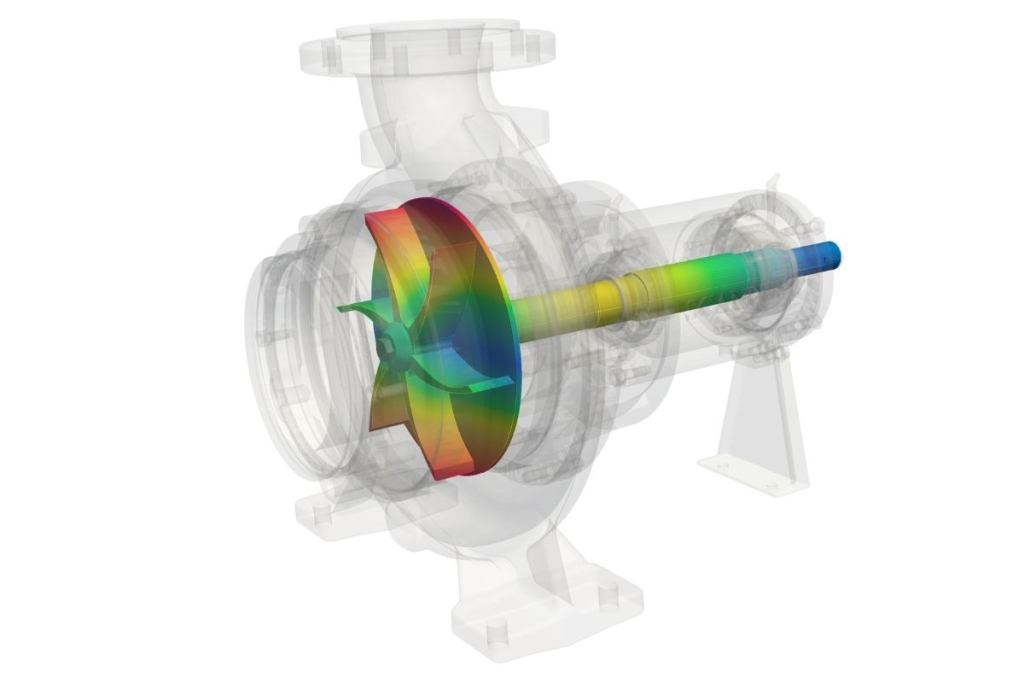
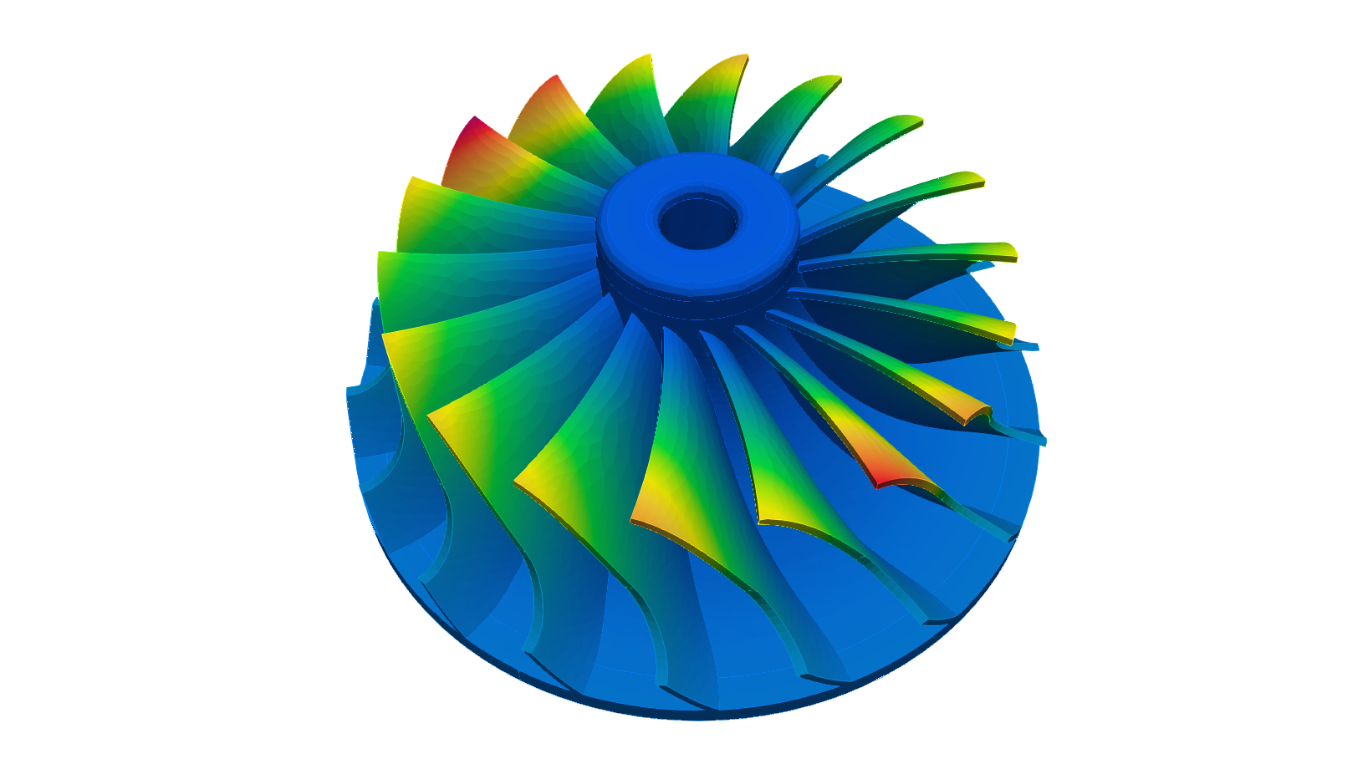
3D FEA Rotordynamics – Detailed 3D model used to examine non-axisymmetric effects and validate rotordynamic behaviour.
Engineering interpretation – Results reviewed to confirm acceptable vibration levels, stability, and compliance with API 684 expectations.
Key API 684 Rotor Dynamics Criteria Evaluated:
Critical speeds and separation margins
Stability assessment via logarithmic decrement
Unbalance vibration response predictions
Critical speeds and separation margins
Stability assessment via logarithmic decrement
Unbalance vibration response predictions
Our API 684 rotor dynamic analysis confirmed acceptable critical speed separation, stable dynamic behaviour, and low vibration response of the overhung rotor.
Solution
A detailed rotor dynamics model of the overhung pump rotor was developed using an API 684–aligned methodology. The analysis included identification of critical speeds through Campbell diagram evaluation, stability assessment using logarithmic decrement, and unbalance response simulations to quantify vibration amplitudes. Bearing stiffness and damping were incorporated to represent realistic support conditions, while a complementary 3D FEA model was used to capture non-axisymmetric effects and validate modal behaviour, ensuring a robust and representative prediction of rotor dynamic performance.
Results
The analysis confirmed that the rotor operates with adequate separation margins from critical speeds and exhibits stable dynamic behaviour with positive damping characteristics. Predicted vibration amplitudes under representative unbalance conditions remain low, indicating minimal risk of excessive vibration or instability. In practical terms, this supports reliable pump operation, reduced likelihood of seal and bearing issues, and overall improved mechanical integrity, contributing to lower maintenance requirements and enhanced operational confidence in demanding service environments.
Industry Context
Importance of Rotor Dynamics in Rotating Equipment
Rotating equipment such as centrifugal pumps plays a critical role in oil and gas, chemical processing, and water treatment systems, where continuous and reliable operation is essential. The dynamic behaviour of rotors directly influences vibration levels, component life, and overall machine stability. In configurations with overhung impellers, sensitivity to unbalance, hydraulic excitation, and support stiffness can significantly affect performance. Without proper rotor dynamic analysis, these effects may lead to excessive vibration, reduced efficiency, and increased risk of mechanical failure.
Industry standards such as API 610 establish vibration limits and mechanical requirements for pumps, while API 684 provides detailed guidance for rotor dynamics, including critical speed assessment, stability evaluation, and forced response analysis. Applying these methodologies enables accurate prediction of rotor behaviour under realistic operating conditions. In practice, this supports improved reliability, reduced maintenance, and lower risk of unplanned downtime in critical industrial applications.
Chat with our engineering team
1
Hi, welcome to Resonant Engineering
Have a question about our services?
Click the button to chat with our engineering team on WhatsApp.