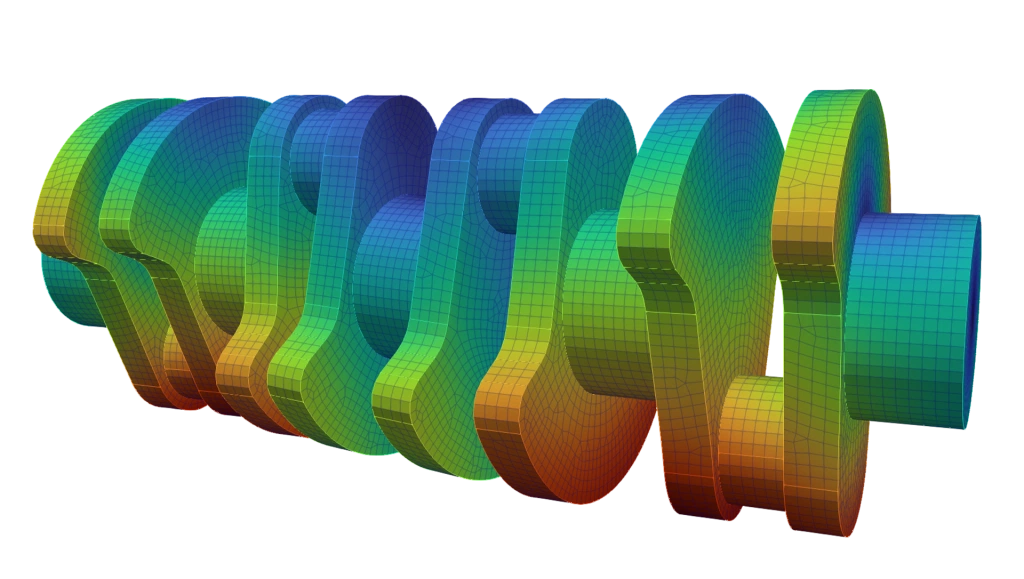
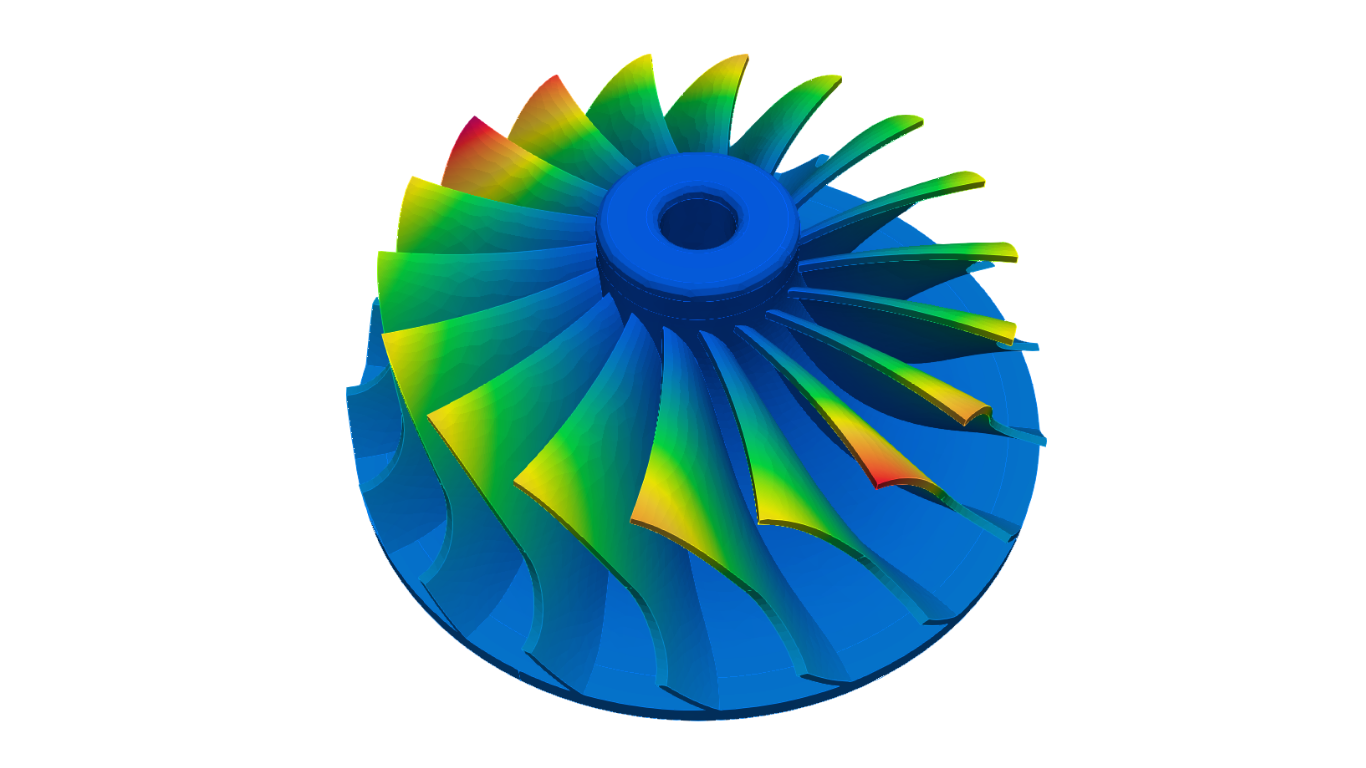
Vibration and stability problems are common in rotating machinery and can affect lifespan, performance, or otherwise jeopardize structural integrity. Our rotordynamics analysis services shed light on the behavior of rotating parts in real-world scenarios. For rotational systems, where malfunctions may result in hazardous situations, prolonged downtime, or expensive repairs, rotordynamics evaluation is crucial.
A branch of applied mechanics called rotordynamics studies how rotating structures behave. It can be used to analyze a variety of systems, including computer disk drives, automobile engines, steam turbines, and jet engines. Fundamentally, rotordynamics studies the vibrations produced by rotating rotors held up by bearings inside a stationary structure.
Research & Consulting Services for Rotordynamics Analysis
Vibration levels frequently peak at particular frequencies known as critical speeds as rotational speed rises. Usually caused by unbalanced forces, the ensuing vibration can grow severe and, if left unchecked, result in catastrophic failure. Furthermore, rotating systems may experience design-specific internal instabilities that need to be recognized and fixed to guarantee dependable and safe operation.
Addressing these challenges is a primary concern during design stages of high-performance rotating systems.
Catastrophic failure due to instability or loss of structural integrity
Excessive bearing or seal wear affecting reliability and availability
Fatigue or failure of shafts, casings, or mounting structures
Excessive vibration limiting performance or operation
Our rotordynamics capabilities help ensure that potential problems are identified, mitigated, or designed out early in the design process.
Our Expertise in Rotordynamics
Resonant Engineering uses finite element modeling (FEM) and sophisticated computational-aided engineering (CEA) technologies to create intricate rotor-bearing-stator models. High-accuracy forecasts from these models offer useful information needed for system design. Among our primary rotordynamics analysis offerings are:
Finding the speeds at which resonance happens in order to reduce harmful vibrations is known as critical speed analysis.
Campbell diagrams and mode shape are useful tools for visualizing vibration modes and monitoring frequency vs speed in order to identify possible resonances.
Assessing the effects of unbalance forces on system behavior in order to comprehend system vibration is known as imbalance response analysis.
Stability and Damping Optimization: By examining damping properties, equipment stability is ensured.
Design Sensitivities and Robustness Studies: Evaluating the impact of design modifications on performance to build more robust systems.
Chat with our engineering team
1
Hi, welcome to Resonant Engineering
Have a question about our services?
Click the button to chat with our engineering team on WhatsApp.