Predictive Maintenance:
Cloud Data Processing Software
Case Study: Using Physics-Based Algorithms and ML Models to Predict Failures and Minimise Downtime for Rotating Systems
Industry
Rotating Machinery Predictive Maintenance
Challenge
Developing a cloud-based solution for predictive maintenance of mechanical faults in rotating machines from vibration data measured by remote Internet of Things (IoT) sensors
Solution
Resonant Engineering developed a bespoke data‑processing pipeline for predictive maintenance, combining physics‑based rules with advanced machine learning
Results
A scalable system where vibration data are automatically collected and processed in the cloud, enabling predictive maintenance decisions that reduce downtime, maintenance costs, and component failures
This case study documents the technical development behind Chladni platform – a predictive maintenance solution that uses remote sensors and automatic data processing pipeline to save money on maintenance of rotating machines.
Predictive maintenance plays a critical role in industrial operations by enabling early detection of developing faults, reducing unplanned downtime, and extending the lifetime of machinery.
By shifting maintenance strategies from reactive or time‑based approaches to vibration-based decision making, manufacturers can significantly improve reliability, safety, and overall operational efficiency.
The Innovative Idea
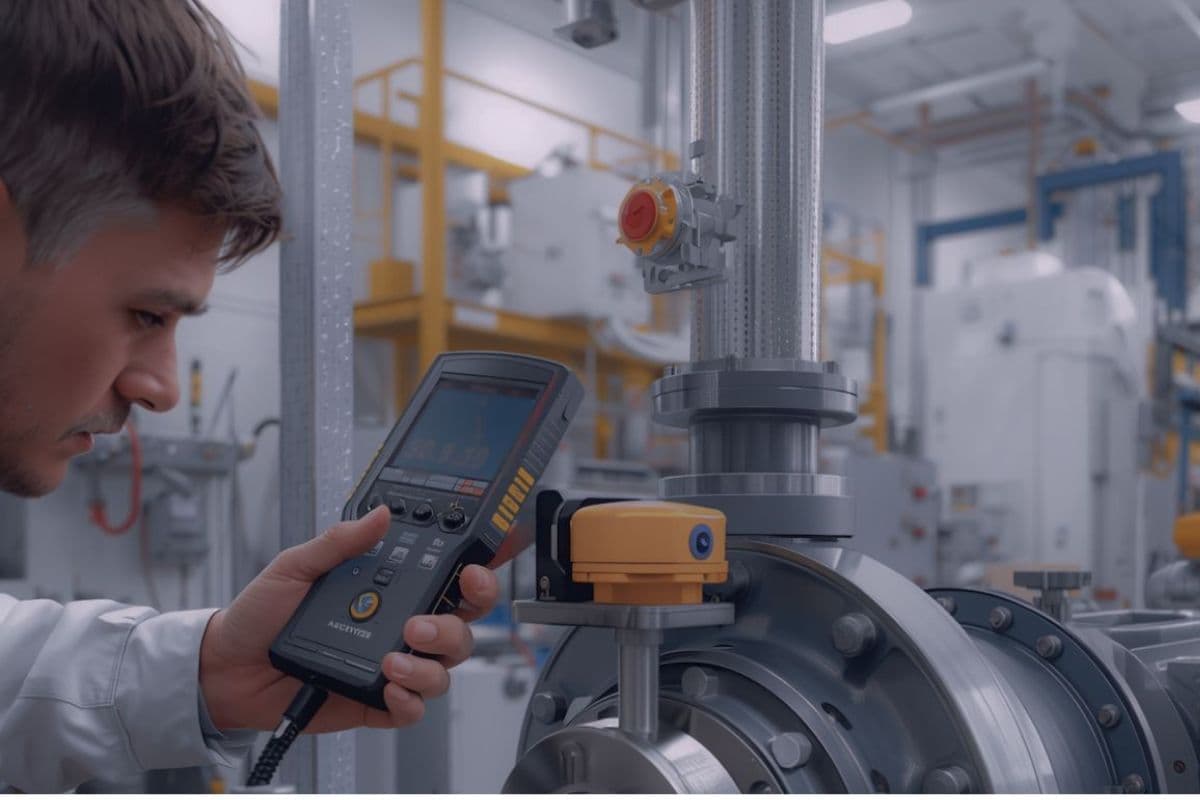
To acquire and process vibration data, Chladni Industrial Systems LLC set out to develop remote measurement devices that periodically transmit data to the cloud for automated processing.
This enables regular, objective evaluation of machine condition while eliminating reliance on infrequent manual measurements and expert‑dependent data interpretation. As a result, faults can be identified earlier and maintenance decisions made more consistently and at scale.
Collaboration with Resonant Engineering
Resonant Engineering Ltd. was engaged early in Chladni’s development process as the principal partner for vibration expertise. The collaboration covered specification, physical design, and testing of the IoT sensor.
Resonant Engineering’s primary responsibility was to lead the development of the predictive maintenance algorithms. This work spanned from initial concept through final cloud‑based implementation, combining physics‑based rules with machine‑learning techniques.
Resonant Engineering helped shape our entire predictive maintenance system — from sensor data handling to feature extraction, filtering, and interpreting vibration patterns with precision. Whether it’s accelerometer setup, signal processing, or fault diagnostics, they always find the simplest and smartest solution.
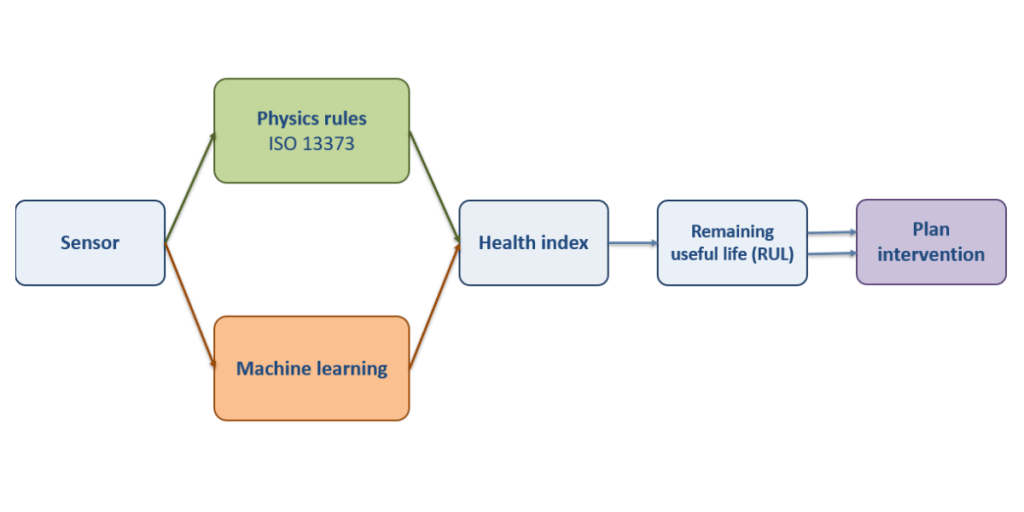
Resonant Engineering developed a two‑part predictive maintenance workflow:
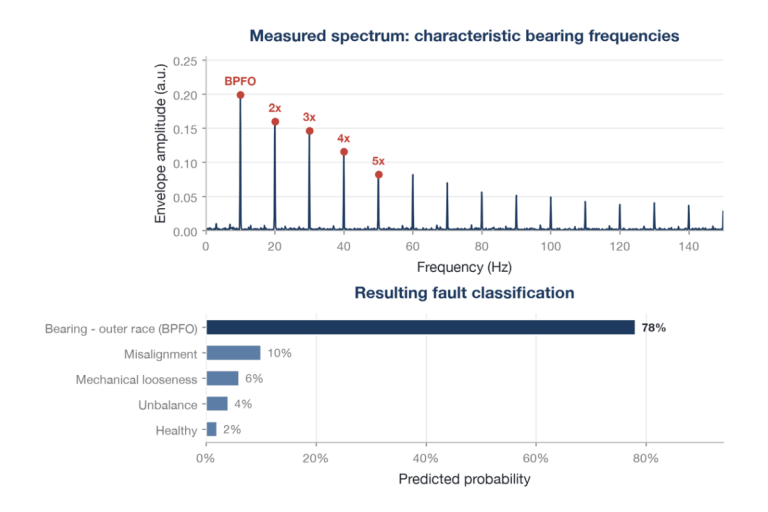
Physics‑based rules: Based on ISO 13373, this classical approach analyses spectral content, identifies characteristic harmonics, and detects faults using established vibration‑based criteria.
Machine learning, implemented in two stages:
Supervised learning: fault classification based on labelled vibration patterns.
Unsupervised learning: anomaly detection to identify previously unseen or emerging fault conditions.
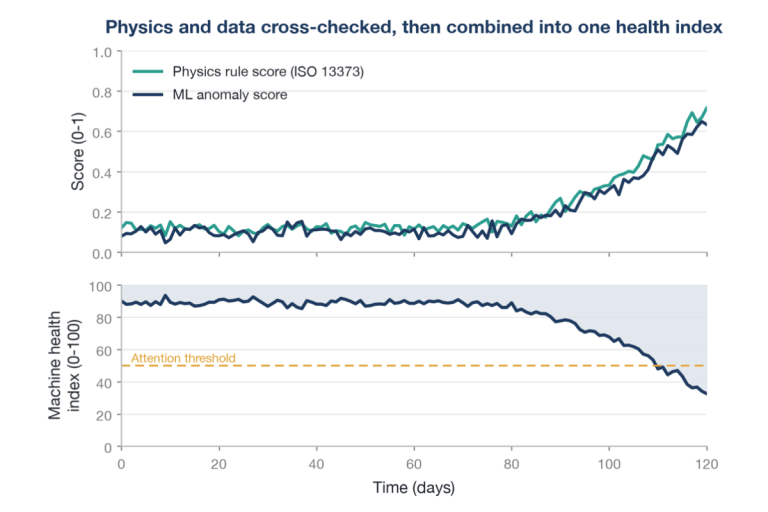
The machine‑learning methods are used not only to cross‑check the physics‑based rules, but also to extend detection capability where labelled data are unavailable.
Both approaches were developed and integrated into a unified solution that delivers fault classification, condition trending, and early anomaly detection.
The developed system was benchmarked against multiple commercial and academic data set, confirming its accuracy and robustness.
Solution
The final solution combines both physics‑based diagnostics and machine learning into a single processing pipeline. Outputs from both methods are cross‑validated and aggregated into a machine health index, representing the current state of the machine and feeding into predictive maintenance models.
Together with the IoT sensor, cloud‑based processing, and streamlined dashboard, the final Chladni workflow provides industrial users with predictive maintenance capabilities that can be deployed rapidly—removing traditional barriers such as the need for specialist vibration expertise, expensive sensors, and complex cabling and data acquisition systems.
Results
By delivering an end‑to‑end predictive maintenance solution, Chladni provides the intelligence layer modern factories can rely on to prevent failures, optimise output, and eliminate hidden energy losses. Operations become smoother, smarter, and more aligned with performance targets.
Chladni integrates seamlessly into existing systems with no workflow disruption. It transforms raw vibration data into actionable business decisions, grounded in sound engineering principles and delivered in an accessible and intuitive way.
In rotating machinery, developing faults often produce measurable vibration signatures before functional failure occurs. Changes in spectral content, harmonic behavior, modulation patterns, and transient response can reveal early-stage issues such as imbalance, misalignment, looseness, resonance, and bearing degradation.
However, reliable interpretation of vibration data is technically challenging. Measured signals are influenced by operating conditions, structural dynamics, sensor placement, speed and load variation, background noise, and machine-specific behavior. As a result, fault diagnosis depends heavily on specialist expertise and consistent signal-processing methods.
Traditional vibration monitoring has therefore relied on experienced analysts manually reviewing spectra and trend data. While effective, this approach becomes difficult to scale across large industrial asset bases and continuous monitoring systems.
Modern predictive maintenance platforms increasingly combine physics-based diagnostics with machine-learning techniques to improve the interpretation of vibration data. Physics-based methods remain essential for identifying known fault mechanisms and harmonic relationships, while machine learning extends capability through pattern recognition, classification, and anomaly detection across large datasets.
For industrial operators, this enables condition monitoring systems to move beyond raw sensor data collection toward scalable, automated diagnostics. The result is more consistent, actionable machine-health insight in real operating environments, with earlier intervention and better maintenance planning.
Chat with our engineering team
1
Hi, welcome to Resonant Engineering
Have a question about our services?
Click the button to chat with our engineering team on WhatsApp.