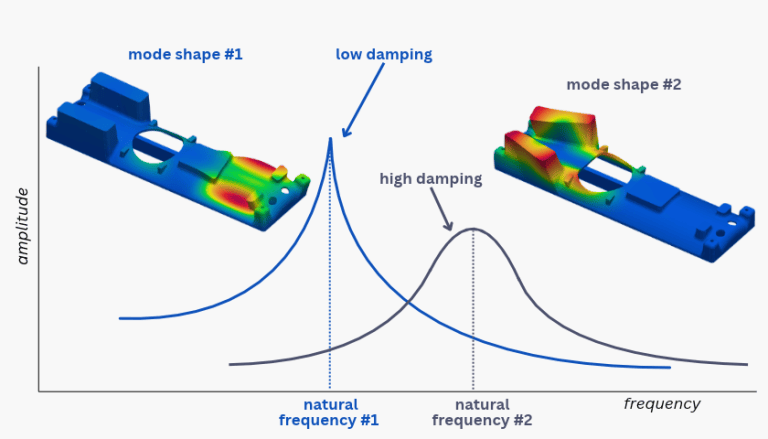
Modal analysis is often the first dynamic assessment performed during design because it identifies natural frequencies and therefore resonance risks. In many applications, ensuring adequate separation between excitation frequencies and natural frequencies is sufficient to create a robust design.
However, modal analysis only describes the dynamic characteristics of a structure. It does not predict vibration amplitudes, stresses or fatigue life under operating conditions. To answer those questions, dynamic analysis is required.
What dynamic analysis tells you that modal analysis cannot
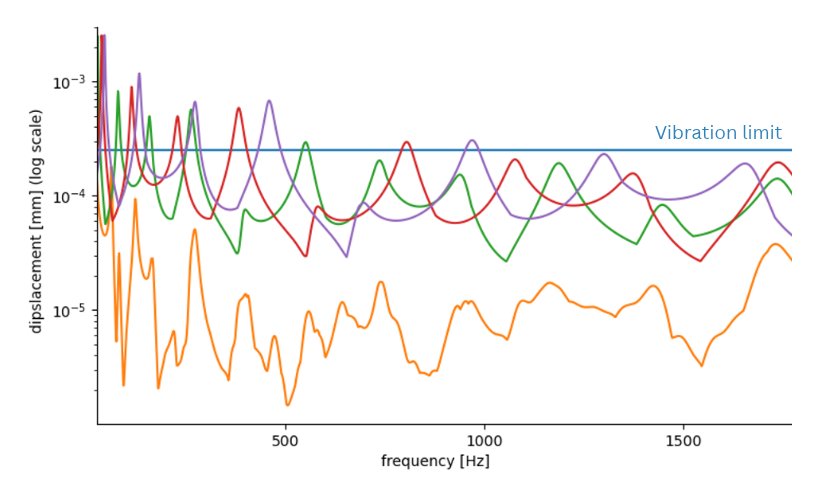
Modal analysis addresses resonance risk, but in some applications this is not enough, since vibration still exists away from resonance conditions. Even non-resonant vibration can cause issues and must be understood. For that reason, other types of analysis are considered during the design stage.
In mechanical systems, these are the most commonly used dynamic analyses:
- Harmonic analysis, used to predict steady-state vibration amplitudes caused by cyclic excitation
- Transient (time-domain) analysis, used to evaluate how changes in excitation affect the response over time
- Fatigue analysis, used to predict useful life under cyclic loading and repeated vibration exposure
- Seismic analysis, used for earthquake qualification
- Response spectrum analysis, used for code-based dynamic loading assessments
- Random vibration analysis, used for broadband excitation environments
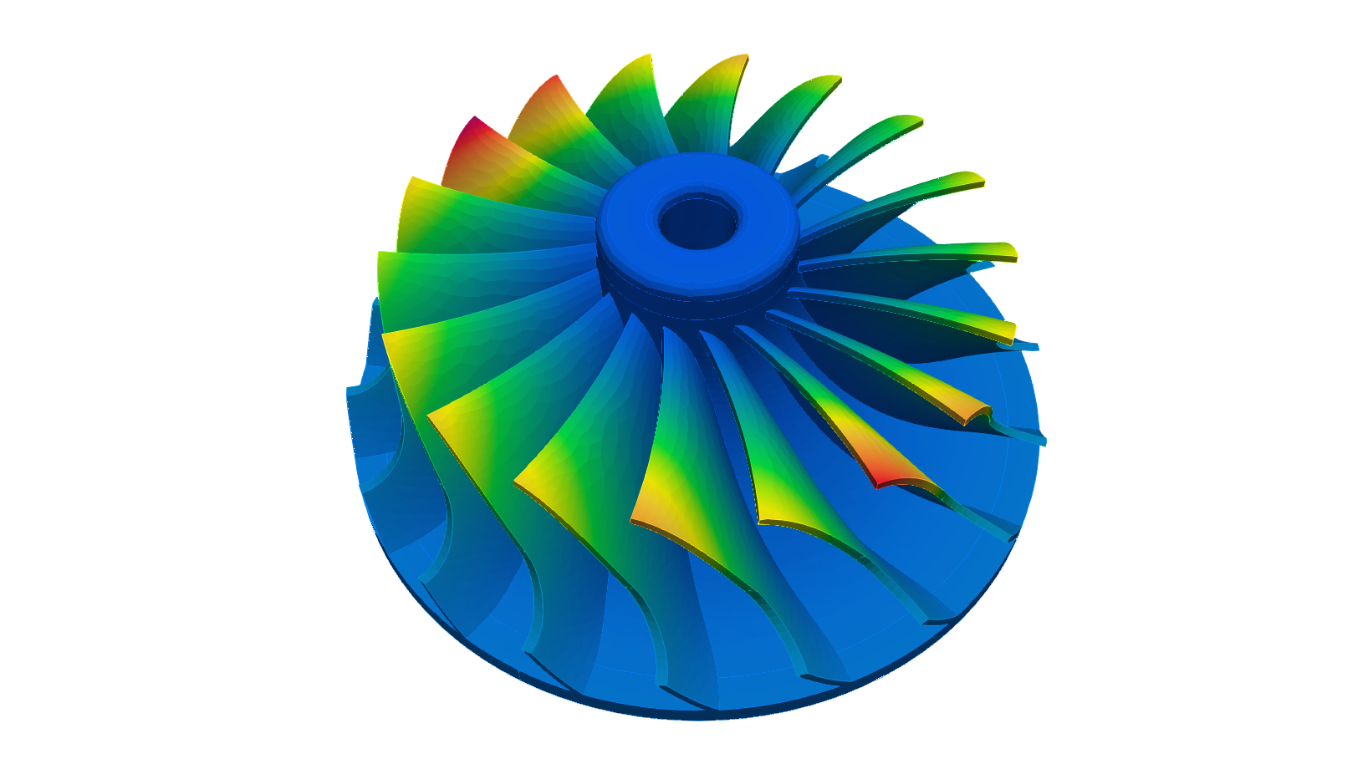
- Rotordynamic analysis, used for rotating equipment.
Ensuring that there is no resonance is often the most important design decision because it means there won’t be any excessive vibration amplification. Consequently, the follow-up analyses may either be completely avoided or performed at later design stages as part of pre-test design validation. For applications involving strict vibration limits, high cyclic stresses or safety-critical equipment, dynamic analysis is typically required to demonstrate acceptable performance.
Choosing the right type of dynamic analysis
The appropriate analysis depends on the engineering question being asked.
If the excitation is periodic and well defined, such as an electric motor running at constant speed, harmonic analysis is usually the most efficient approach. It predicts vibration amplitudes, dynamic stresses and response magnification across the frequency range of interest.
If loads vary with time, such as impacts, start-up events, shutdown sequences or rapidly changing operating conditions, transient analysis is generally more suitable. This approach calculates the time history response and can capture short-duration events that may not be visible in a harmonic assessment.
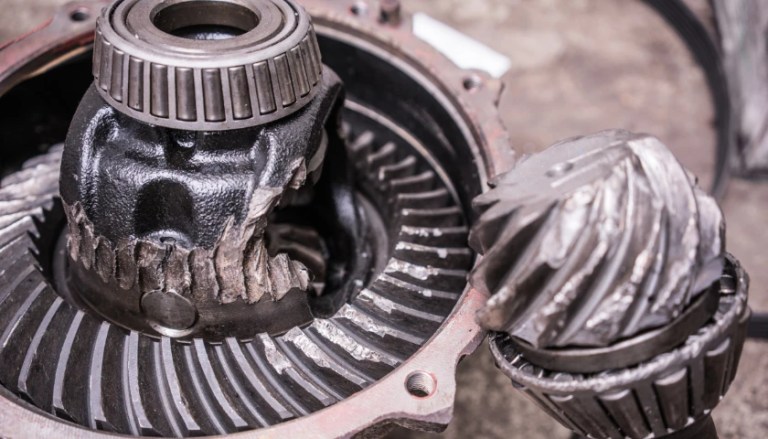
Where durability is important, the predicted dynamic stresses can be used as inputs to fatigue analysis. Even relatively small vibration levels can lead to fatigue failures when repeated millions of times. Fatigue assessments therefore help engineers determine whether vibration-induced damage is likely over the intended service life.
In practice, these analyses are often performed sequentially. Modal analysis identifies resonance risk, dynamic analysis predicts vibration and stress levels, and fatigue analysis evaluates the long-term consequences of those stresses.
Frequently Asked Questions
Dynamic analysis evaluates how a structure responds to time-varying forces. Unlike static analysis, it accounts for inertia, vibration and changing loads to predict displacement, velocity, acceleration and stress over time.
Computational modal analysis identifies natural frequencies and mode shapes but does not calculate response to operating excitation forces. Dynamic analysis uses actual excitation forces to predict vibration amplitudes and dynamic stresses.
Harmonic analysis is used when loads occur at fixed or repeating frequencies, such as rotating machinery, electric motors, pumps, compressors and fans.
Transient analysis is required when loads vary significantly with time, such as impacts, shock events, start-up and shutdown conditions, switching operations or rapidly changing operating speeds.
Yes. Although resonance is often the greatest risk, non-resonant vibration can still generate cyclic stresses that cause fatigue damage, excessive noise, reduced performance or shortened equipment life.

Written by
Vaclav Ondra
Director of Resonant Engineering, specialising in finite element analysis (FEA), vibration consultancy, rotordynamics, and structural integrity of mechanical systems and rotating machinery.